Author: PlantsAlwaysWin

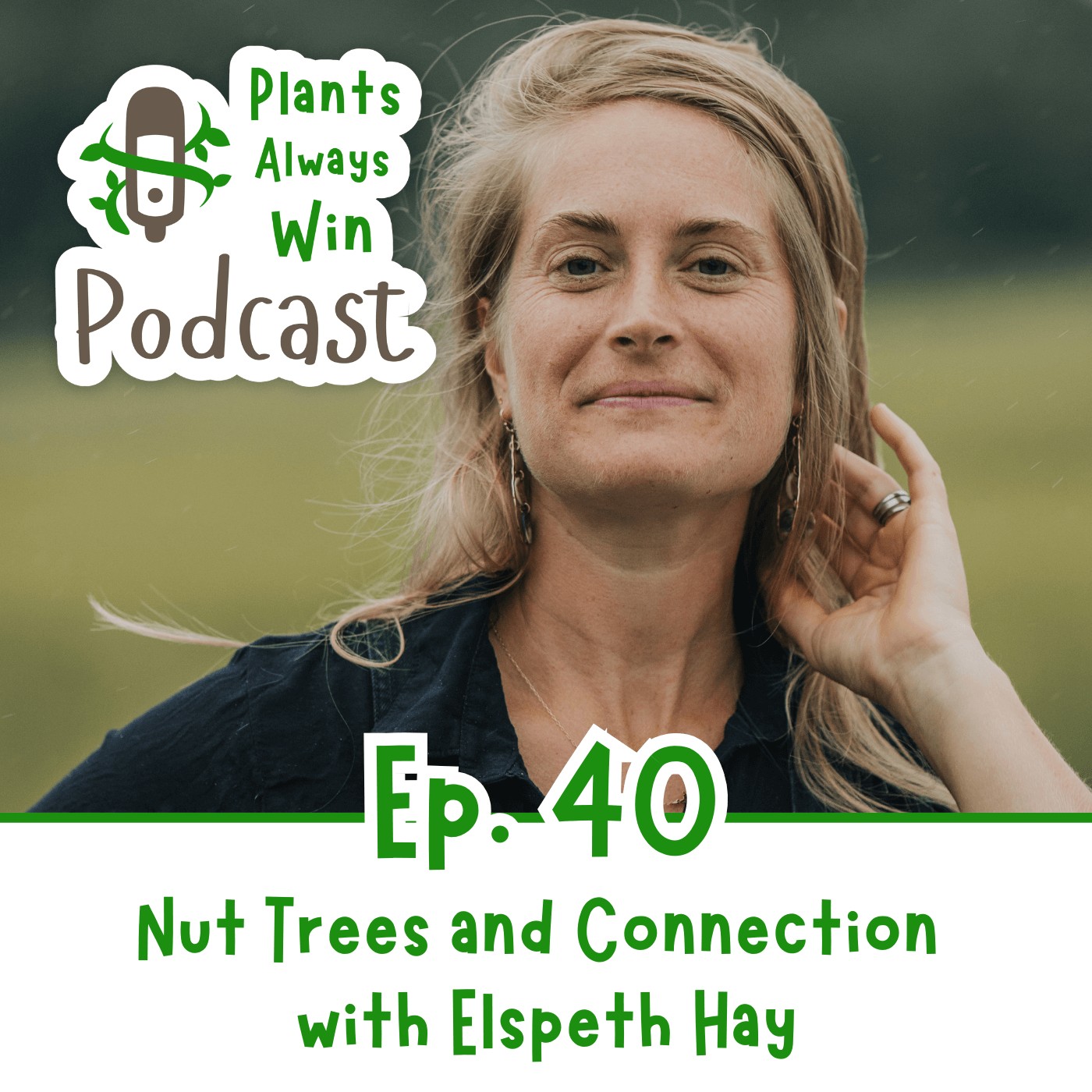
  • Ep. 40 Nut Trees and Connection with Elspeth Hay

    Ep. 40 Nut Trees and Connection with Elspeth Hay

    Feeding humanity doesn’t need to come at the Earth’s expense. Elspeth Hay is here to talk nut trees, ecosystems, and humans as keystone species. 

    In 2019, Elspeth was a local food writer who felt despondent about humans’ need to tear up nature in order to feed ourselves. When she discovered that acorns are edible—that they had, in fact, once been a central pillar of an abundant North American food system—she was electrified. This week she joins Erin to talk about the book that resulted from her all-consuming research into that subject, Feed Us with Trees: Nut Trees and the Future of Food.

    If you have ever felt like human beings are rootless and adrift without our own habitat or wild food that can sustain us, this conversation will open your eyes and seize your heart. Erin and Elspeth discuss the oak savannas and chestnut trees that, managed by Indigenous peoples’ understanding of succession ecology, once fed the human and more-than-human life of a continent. They look at the still-living food culture of chestnuts in Switzerland, grieve over the politics that deliberately erased abundance at home, and embrace hope at the re-emergence of traditional land management practices in agroforestry and restoration agriculture. 

    Join us in re-discovering our habitat and home. Who knows—maybe acorns will change your life, too. 

    Find Elspeth Hay Online

    Website: https://elspethhay.com/
    Instagram: @elspethhay
    The Local Food Report: https://www.capeandislands.org/podcast/the-local-food-report
    Feed Us with Trees: https://newsociety.com/book/feed-us-with-trees/?aff=65 

    Comments? Feedback? Want your garden question to be featured in a future Q&A segment? 

    Email us, reach out over social media, or get Q&A priority by supporting us on Patreon

    Discord: https://discord.gg/K6wF9dY4Ja
    Bluesky: @plantsalwayswin.com
    TikTok: @plantsalwayswinpodcast
    YouTube: @plantsalwayswinpodcast
    Website: www.plantsalwayswin.com 

    Credits
    Website Design and Illustration by Sophia Alladin

    Intro and Outro Music from #Uppbeat (free for Creators!): https://uppbeat.io/t/soundroll/when-my-ukulele-plays

    License code: GWOIMMBAS15FG6PH

    Timestamps

    00:14 Introduction
    01:00 Feed Us with Trees: Nut Trees and The Future of Food 
    01:48 Elspeth’s Career in Food and the Environment
    02:41 The Lightbulb Moment: Humans Can Eat Acorns
    03:27 It Never Made Sense to Me That We Didn’t Have a Habitat
    07:39 The Chestnut Huts of Switzerland: A Living Food Culture
    09:46 Our Grief and Homesickness for Connection to Place and Species
    10:43 The Land of Opportunity Myth
    13:07 Oak Savannas and Chestnut Groves: Pillars of an Indigenous Food System
    14:39 Food is Politics: The Deliberate Dismantling of Abundance in North America
    19:40 Trespass Laws Were Created to Control Formerly Enslaved Foragers
    22:00 How Capitalism Makes Food Political
    23:47 The Movement to Revive Perennial Food Ecosystems
    26:50 Ecological Succession and Embracing Traditional Land Management
    30:41 Oaks as the Tree of Life, Biodiversity Champions
    32:00 Nature Preserves Are the Wrong Approach. The Land Needs Us.
    34:17 Hazelnut Basketry and Kuruk Culture to Elspeth and Erin’s Willow Basketry
    37:42 The New Forest in England: An Unenclosed English Farm
    40:20 Elspeth’s Recommended Resources
    41:50 Elspeth’s Shout-Outs
    44:26 Parting Words of Wisdom
    45:12 Outro and Contact Us

  • Ep. 39 Plant Evolution: Kid Q&A

    Ep. 39 Plant Evolution: Kid Q&A

    Kids ask the best nature questions!

    For this episode, a class of elementary-school students prepared a list of questions about plants for Sean and Erin to answer. The best part, of course, is that these are questions few adults would think to ask, and they let our hosts explore all sorts of fascinating topics. How did plants come to be the way they are? Why did they evolve to have roots (or no roots!) and leaves and fruit? What makes one tree grow big leaves while another one has narrow needles? We talk evolutionary niches, the tree of life, food chains, and even how plants move water and sugar through their cells. 

    Step into our plant-life classroom and see what you can learn from the curiosity of children!

    Comments? Feedback? Want your garden question to be featured in a future Q&A segment? 

    Email us, reach out over social media, or get Q&A priority by supporting us on Patreon

    Discord: https://discord.gg/K6wF9dY4Ja
    Bluesky: @plantsalwayswin.com
    TikTok: @plantsalwayswinpodcast
    YouTube: @plantsalwayswinpodcast
    Website: www.plantsalwayswin.com 

    Credits
    Website Design and Illustration by Sophia Alladin

    Intro and Outro Music from #Uppbeat (free for Creators!): https://uppbeat.io/t/soundroll/when-my-ukulele-plays

    License code: GWOIMMBAS15FG6PH

    Citations

    Bryophytes and Tracheophytes? Categories of Plants With and Without Roots
    Plant diversity. (n.d.). NatureWorks. https://nhpbs.org/natureworks/nwep14b.htm 

    The Parts of a Leaf
    Libretexts. (2022, May 4). 13.1: Leaf parts and arrangement. Biology LibreTexts. https://bio.libretexts.org/Bookshelves/Botany/A_Photographic_Atlas_for_Botany_(Morrow)/13%3A_Leaves/13.01%3A_Leaf_Parts_and_Arrangement 

    Making Paper from Plants at Home

    Quillen, K. (2023, October 3). How to make paper from plants – Mother Earth news. Mother Earth News – the Original Guide to Living Wisely. https://www.motherearthnews.com/diy/making-paper-from-plants-zm0z17jjzqui/

    Lipman, B. (2024, October 16). Paper from Iris and Daylily. https://www.handpapermaking.org/post/paper-from-iris-and-daylily 

    Timestamps

    00:13 Introduction
    01:13 What’s Growing On: Sean’s Seed Saving
    02:56 What’s Growing On: Erin’s Season Extension
    05:53 Do All Plants Have Roots? Let’s Talk Bryophytes
    06:08 Plants’ Vascular Systems: Xylem and Phloem
    08:40 Why Do Plants Need Roots?
    11:15 Many Types of Roots
    12:29 What is the Blade on a Leaf?
    14:40 Why do Oak Leaves Get So Big?
    20:22 How Fast Can Some Flowers Grow?
    26:17 Why Do Plants Grow Food?
    32:51 How Do Plants Survive the Winter?
    41:38 Erin’s New Picture Book: If You Go Walking
    42:58 How Do You Make Paper with Plants?
    46:10 Paper Recycling Tangent
    47:06 Making Paper from Daylilies and Iris
    54:33 Outro and Contact Us

  • Feed Yourself from your Garden

    Feed Yourself from your Garden

    You don’t need a lifetime of gardening experience to grow fruits and vegetables in your garden…but getting advice from those with experience certainly helps! To get your edible garden off to a successful start, we’ve gathered tips from sixteen expert members of Garden Communicators International

    “For beginners, I suggest starting small. For the best success, I recommend getting certain plants from the garden centre rather than growing from seed: plants like tomatoes and peppers. Grow what you and your family like. If no one likes kale, don’t plant it.”

    Jo Ellen Meyers Sharp is a garden speaker, writer, designer, and coach at The Hoosier Gardener.

    “Start easy and quick with crops like radishes. Then invest in some perennial food crops (e.g., blackberries and asparagus) and fruit trees (e.g., figs).

    Kathy Jentz is the editor and publisher of Washington Gardener Magazine and the host of GardenDC Podcast.

    “I’m a big proponent of No Dig Gardening. It’s a great way to create a raised-bed garden with less weeds and watering, more production, and less work. The steps are simple. Mow down the area where you want to build a raised bed. Lay down four to six layers of newspaper (not glossy). Then alternate layers of untreated grass clippings, chopped leaves, hay, straw, and chopped kitchen scraps until you fill the bed. It’s also called lasagna gardening. Top with four inches of compost if you’re building it in fall. Add six to eight inches if you’re building it in winter or spring. Plant right through the compost and you’ll see how productive the garden becomes.”

    Charlie Nardozzi is the author of The Complete Guide to No Dig Gardening.

    “​‘Beans, beans—the magical fruit!’ I recommend growing beans to beginner gardeners because they are so easy and cheap to grow. I just plant the seeds directly into the soil. They’re also very productive. My garden produces enough beans every summer to last me until the next year’s harvest begins. You can preserve them for year-round use by freezing (my preferred method), canning, or drying. I also recommend beans for their nutritional value. Green beans contain protein, vitamin C, iron, and calcium. There are many varieties to choose from, too. I grow mostly green beans and wax beans (my husband’s favourite), but it’s also fun to try purple beans and speckled varieties. Two years ago I started growing some black beans for drying.”

    Debbie Rea at The Gardener Wife helps people grow things and use what they grow.

    “If you don’t have room enough to designate one area to grow food, consider growing in containers. There are now many varieties of vegetables and fruits that thrive in five- to ten-gallon containers. Incorporate the containers into sunny spots among ornamental plants in your yard, or on a deck, porch, or balcony.”

    Phyllis Gricus is a speaker, writer and ecological landscape designer.

    “Start with something small regardless of the size of your available growing space. Use a container for lettuces and greens that are high in nutritional value (like kale and collards). These don’t do well in heat and drought, but depending on where you live, they can be grown in the spring and fall or all through winter.”

    Nancy Taylor Robson is a Master Gardener, writer, author, and editor.

    “In a small garden, just plant one of each tomato. Zucchini is a plant that will continue to produce fruit all season long. One plant is sufficient for a family of four. Two plants for a family of five to seven. If your garden is larger, consider donating to the local food bank.

    Growing beans? Grow them up on trellises or on a fence. Do the same with cucumbers and peas. This will give you more space in the garden.”

    Denise Schreiber is a garden speaker, an All America Selections Trial judge, a retired arborist, and the author of Eat Your Roses, Pansies and Lavender and 49 Other Delicious Flowers

    “Focus on what I call ‘factory vegetables’ that can be harvested continuously over a three- to four-month period: lettuces, mustard greens, Swiss chard, kale, spinach, and tender herbs like cilantro and parsley. They take up little space and keep giving throughout the season if you harvest the outer leaves instead of the whole plant.”

    Christy Wilhelmi is the founder of Gardenerd and specializes in small-space organic vegetable gardens.

    “Don’t forget all those tasty ornamentals you already have in your garden! Spruce tips add great flavour (and vitamin c) to ice cream and custards, Malabar spinach is an excellent heat-tolerant leafy green, and Dolgo crab-apples are every bit as crisp and tasty as your favourite tart apple. Not to mention hosta shoots, dahlia tubers, daylily buds, Jerusalem artichokes, serviceberries…”

    Ellen Zachos is an author of popular foraging books who helps adventurous foodies cook with wild plants at The Backyard Forager.

    “Plant lots of fruit trees! When we talk about growing edibles, we often forget about fruit trees. Fruit trees are far easier to grow than vegetables. You plant them once, fertilize and prune on occasion, spray once a year when dormant, water as needed, and reap the rewards. Depending on your climate, you can grow everything from apples to apricots, pomegranates to pears, and so much more. Fruit trees do double duty as beautiful garden plants as well. An apple or cherry tree espalier adds a touch of elegance to any garden. Guavas have gorgeous bark. Persimmons hanging on leaf-less branches look like bright orange ornaments. Citrus make wonderful evergreen screens that perfume the air when they bloom in spring. There’s every reason to add fruit trees to your garden.”

    Nan Sterman grows gardens and gardeners at WaterWise Gardener.

    “I live in a short-season area. It’s critical to check how many days a plant takes to reach maturity and make sure your growing season is at least that long. The best heirloom tomato won’t cut it if the tomato takes 80 days to ripen while the heat season is only 70 days.”

    Patricia Munts is a garden coach, columnist, and co-author of the Northwest Gardener’s Handbook.

    “Collecting and trapping the sun’s heat will let you get a jump start on germinating and eventually harvesting your food crops: Turn an old plastic tote/ storage bin upside down and you’ve got a mini greenhouse. Or make a temporary low tunnel with rebar, PVC, and some poly covering (2-6 mml). You can also grow in a cold frame, which is a permanent structure and usually holds in more heat than a low tunnel.

    Each layer of cover, be it a bin, a low tunnel, or a cold frame, will help focus the sun’s rays, heat the soil, and trap that heat in longer every night, slowly raising the temperatures so you can start seeds or transplant seedlings out weeks to a month earlier.”

    Michelle Bruhn is the founder of Forks in the Dirt, an online information source for growing your own food.

    “Since we don’t get a lot of summer heat, we use lots of Wall-o-Water season extenders to get our tomatoes, peppers, and eggplants started earlier in the spring. We have two cold frames for early- and late-season greens.”

    Mark Turner of Turner Photographics has been photographiing gardens for books and magazines since 1994.

    “A simple home-made hoop house can extend your growing season further into the fall and give you a head start in the spring. If your climate permits, employing these all year will allow you to grow different crops and varieties than you might otherwise because of the added warmth.”

    Debby Ward is a Professional Organic Coach, Speaker, and Trainer at Prior Unity Garden.

    In the United States

    “All gardening is local. Locate your county extension agent for agriculture in your area (search by entering “extension agent” and your county name). The county extension agent is responsible for answering gardening questions and providing local gardening education. The person also manages the master gardener program where volunteers provide free services to the public such as plant clinics, a help desk or help line, an informative website, and events, lectures, and webinars.”

    Peggy Riccio writes pegplant.com, an online resource for gardening in the Washington DC metro area.

    In Canada

    “To grow perennials that come back every year, you need to know your Canadian hardiness zone. Search for your town name + ‘hardiness zone.’ You can grow plants that are hardy to your zone or to one with a smaller number. The United States’ zones are calculated differently, so beware of imported plants in garden centres that say ‘USDA zone,’ because they might not be exactly right for you. Check the conversion here. For local advice (which is always the most helpful advice in gardening), search for a horticultural society or Master Gardeners group near you.”

    Erin Alladin helps people grow food in ways that are good for our bodies and the earth at Earth Undaunted and co-hosts the Plants Always Win podcast.
  • Ep. 38 Little Shop of Horrors

    Ep. 38 Little Shop of Horrors

    This episode is what happens when two people’s loves for venus flytraps, spooky season, and movie musicals collide. 

    Yes, we’re doing nerdy Halloween horticulture by analyzing the representation of carnivorous plants in the classic musical Little Shop of Horrors—specifically the 1986 movie version. If you  haven’t seen the show, don’t worry; we set the stage for you and save any late-story spoilers for the very end. For the most part, we’re interested in one question: based on our knowledge of real-world carnivorous plants, how reasonable were Seymore’s guesses when he first tried to care for Audrey II? This requires, of course, an exploration of Venus flytraps’ habitat and habits, how they reproduce, and of the care they need to thrive in our homes. 

    The movie does raise one more hypothetical, and I’ll put this in code for our listeners who still need to watch it: that ending. Would it really have worked? We get a buzz out of exploring the idea.

    Comments? Feedback? Want your garden question to be featured in a future Q&A segment? 

    Email us, reach out over social media, or get Q&A priority by supporting us on Patreon

    Discord: https://discord.gg/K6wF9dY4Ja

    Bluesky: @plantsalwayswin.com

    TikTok: @plantsalwayswinpodcast

    YouTube: @plantsalwayswinpodcast

    Website: www.plantsalwayswin.com 

    Credits

    Website Design and Illustration by Sophia Alladin

    Intro and Outro Music from #Uppbeat (free for Creators!): https://uppbeat.io/t/soundroll/when-my-ukulele-plays

    License code: GWOIMMBAS15FG6PH

    Citations

    Little Shop of Horrors

    Oz, F. (Director). (1986). Little shop of horrors. The Geffen Company.

    Venus flytrap Overview

    Venus flytrap (Dionaea muscipula). (n.d.). iNaturalist. https://www.inaturalist.org/taxa/52666-Dionaea-muscipula

    Venus flytraps benefit from fires

    Venus Flytrap. (n.d.). National Wildlife Federation. https://www.nwf.org/Educational-Resources/Wildlife-Guide/Plants-and-Fungi/Venus-Flytrap

    A chemical signal from the flytrap’s prey stimulates the secretion of enzymes.

    Lady Bird Johnson Wildflower Center – the University of Texas at Austin. (n.d.). https://www.wildflower.org/plants/result.php?id_plant=dimu4

    Overwintering your venus flytrap

    Little Shop of Horrors. (2025, January 12). Overwintering Venus flytraps. Littleshopofhorrors.co.uk. https://www.littleshopofhorrors.co.uk/over-wintering-venus-flytraps/ 

    Timestamps

    00:39 Introduction

    01:35 What’s Growing On: Sean’s Winter Prep

    02:20 What’s Growing On: Erin’s Tomatoes and Greenhouse Build

    03:10 Sean’s Pumpkin-Deer Showdown

    05:48 Water Break

    06:00 Setting the Scene: Little Shop of Horrors

    07:44 How Carnivorous Plants Eat

    11:26 Can a Carnivorous Plant Survive on Human Blood?

    12:46 Venus Fly Trap Etymology

    15:50 How the Venus Fly Trap Grows

    18:35 Audrey II’s Structure vs. Venus Fly Trap Structure

    21:39 Taking Care of Audrey II vs. a Venus Fly Trap

    32:24 Overwintering Your Venus Fly Trap

    34:51 SPOILER WATER BREAK

    35:20 Propagating a Venus Fly Trap vs. Audrey II

    41:28 Ethical Purchasing of Venus Fly Traps

    42:49 Buying Cool Cultivated Varieties

    43:33 Can You Kill a Plant with Electrocution?

    47:29 Conclusion and Contact Us

  • Ep. 37 Sunflower vs. Sunchoke

    Ep. 37 Sunflower vs. Sunchoke

    It’s the versus episode they said couldn’t be done.

    Well, okay, not sure who “they” are, but something has certainly been conspiring against it. We first attempted an episode on sunchokes, also known as Jerusalem artichokes, in the fall of 2024, before Plants Always Win was launched. It got left on the cutting room floor. Then in September of this year we recorded a proper Sunchokes vs. Sunflowers face-off, spending two hours in the recording studio. 

    We later found out that Sean’s audio had quit after six minutes.

    But if you’re reading these words, we have finally succeeded! With the last of the warm autumn sunshine, we are bringing you sunflowers vs. sunchokes. Or, to put it another way, annual sunflowers vs. one of their many perennial sunflower cousins. Both are native to North America, and both are prolific food crops. The first, though, has been bred for its seed while the second is used for its tubers. And only one of them was at the centre of a $25 million scam that threw parts of the United States and Canada into an uproar in the 1980s. 

    Find out which one that is one by listening…and then reach out by email or social media to tell us which sunflower YOU feel won this week’s plant face-off.

    The Horti Awards

    Vote for Wait Like a Seed at bit.ly/hortiawards. Scroll to the very bottom and select it from the Books drop-down menu. You don’t have to vote in every category.

    Comments? Feedback? Want your garden question to be featured in a future Q&A segment? 

    Email us, reach out over social media, or get Q&A priority by supporting us on Patreon

    Discord: https://discord.gg/K6wF9dY4Ja

    Bluesky: @plantsalwayswin.com

    TikTok: @plantsalwayswinpodcast

    YouTube: @plantsalwayswinpodcast

    Website: www.plantsalwayswin.com 

    Credits

    Website Design and Illustration by Sophia Alladin

    Intro and Outro Music from #Uppbeat (free for Creators!): https://uppbeat.io/t/soundroll/when-my-ukulele-plays

    License code: GWOIMMBAS15FG6PH

    Citations

    Sunflower etymology

    Sunflower – Etymology, Origin & Meaning. (n.d.). Etymonline. https://www.etymonline.com/word/sunflower

    Sunflowers as composite flowers

    Common sunflower. (n.d.). https://www.fs.usda.gov/wildflowers/plant-of-the-week/helianthus_annuus.shtml 

    Sunflowers in Ontario

    top Native Sunflowers for Ontario Gardens — In Our Nature. (n.d.). In Our Nature. https://www.inournature.ca/sunflowers-of-ontario

    The too-many-to-read-out traditional uses of the annual sunflower

    USDA, NRCS, National Plant Data Center. (n.d.). ANNUAL SUNFLOWER. https://plants.usda.gov/DocumentLibrary/plantguide/pdf/pg_hean3.pdf 

    Sunflower oil chemistry and uses

    Sunflower oil. (n.d.). Science Direct. Retrieved September 30, 2025, from https://www.sciencedirect.com/topics/chemical-engineering/sunflower-oil 

    Growing sunflowers

    Spengler, T. (2023, February 10). Sunflower planting pros and cons. Gardening Know How. https://www.gardeningknowhow.com/gardening-pros-cons/sunflower-planting-pros-and-cons 

    Allelopathy

    Allelopathy. (n.d.). Science Direct. Retrieved September 30, 2025, from https://www.sciencedirect.com/topics/agricultural-and-biological-sciences/allelopathy  

    The world’s tallest sunflower

    Associated Press. (2025, September 15). World’s tallest sunflower blooms in an Indiana backyard as a tribute to Ukraine. Spectrum News 1. https://spectrumnews1.com/oh/columbus/news/2025/09/15/world-s-tallest-sunflower-indiana

    Anishinaabe use of sunchokes, a.k.a. Giisisoojiibik

    Geniusz, M. S. (2015). Plants have so much to give us, all we have to do is ask: Anishinaabe Botanical Teachings. U of Minnesota Press. 

    The Jerusalem artichoke multi-level marketing scam

    1980s Farm Crisis: Origins, myths and realities: Jerusalem artichoke miracle crop was a sign – Agweek | #1 source for agriculture news, farming, markets. (2023, June 12). Agweek. https://www.agweek.com/business/1980s-farm-crisis-origins-myths-and-realities-jerusalem-artichoke-miracle-crop-was-a-sign 

    The Great Jerusalem Artichoke Circus: The Buying and Selling of the Rural American Dream, by Joseph A. Amato, 1993, University of Minnesota Press, 280 p. 

    Identify your turfgrass

    Different types of grass: Identifying your lawn’s grass type. (n.d.). Scotts. https://scotts.com/en-us/learn/different-types-of-grass-identify-your-grass.html 

    Timestamps

    00:40 The Sunchoke Curse

    02:29 What’s Growing On: Erin’s Garden-Fresh Meals and Horti Awards

    04:20 What’s Growing On: Sean’s 1,001 Projects and Propagations

    06:00 Water Break

    06:15 The Plant Face-Off: Sunflowers

    07:51 About the Name Sunflower

    08:13 How Sunflowers Grow

    08:55 Perennial Sunflowers of Ontario

    10:25 Uses of the Annual Sunflower

    12:00 Sunflowers are Composite Flowers

    12:45 Heliotropism and Phototropism

    14:35 The Benefits of Heliotropism

    15:50 Sunflowers and Allelopathy

    18:06 A Sunflower Guild

    19:40 Garden-Nerd D&D Tangent

    24:12 The Plant Face-Off: Sunchokes

    24:45 The Only Tuberous Sunflowers

    25:14 Eating Sunchoke Tubers…Without the Gas

    26:25 Harvesting and Managing the Tubers

    29:20 Anishinaabe Communities and Giisisoojiibik

    30:30 Sunchokes’ Invasiveness in Central Europe

    31:00 Get Familiar with New Foods You Can Grow

    33:45 Jerusalem Artichoke Height and Appearance

    35:49 The Jerusalem Artichoke Pyramid Scheme

    42:00 Musings About Fuel from Sunflowers

    45:59 Listener Question: How Do I Know What Kind of Grass I Have?

    51:55 Conclusion and Contact Us

  • Ep. 36 Community Gardens with Jessica Letteer

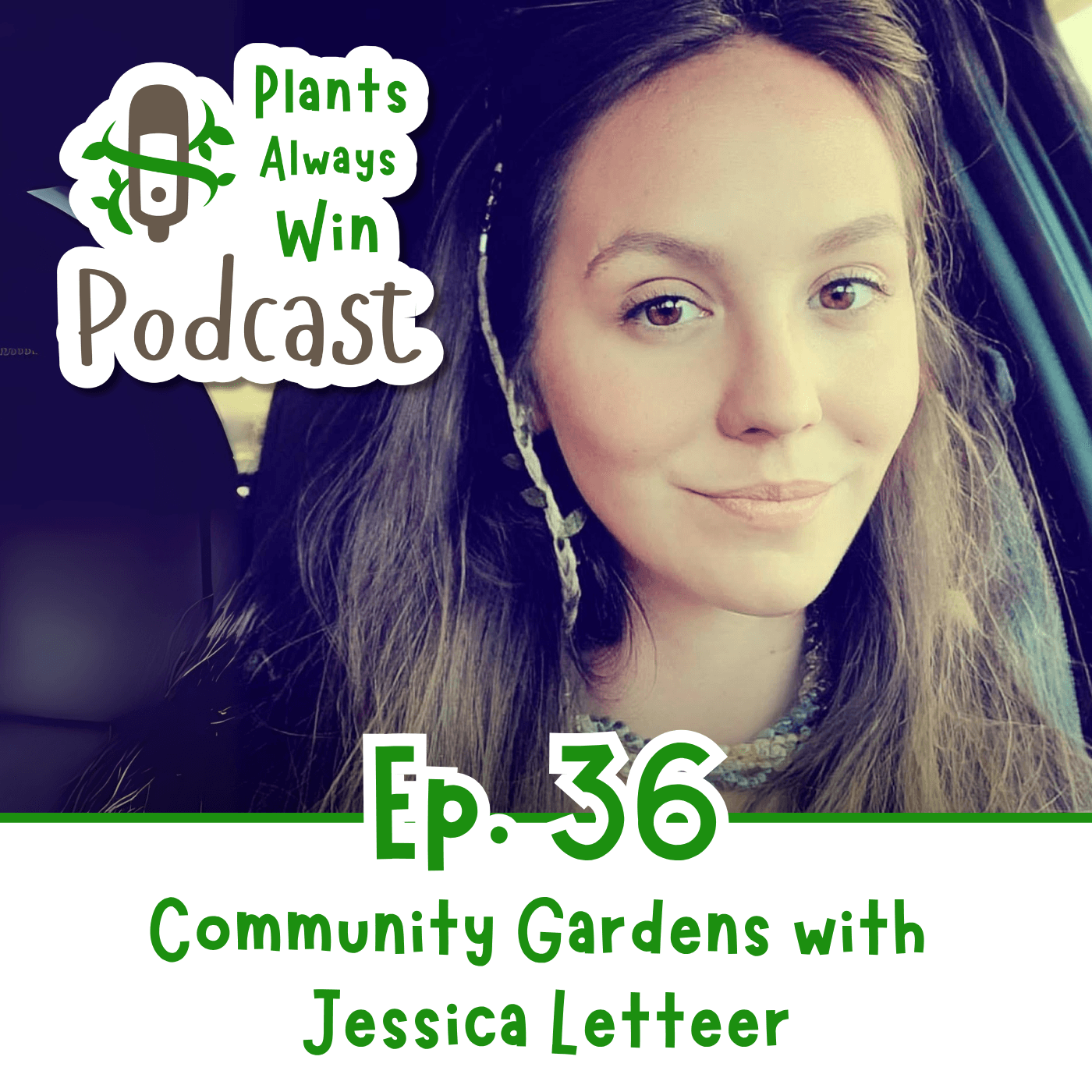
    Ep. 36 Community Gardens with Jessica Letteer

    This episode is for anyone who has ever daydreamed about starting a community garden and for anyone who needs the boost of a good-news gardening story.  

    Our guest is Jessica Letteer, who founded the Wilkes-Barre Area Community Gardens five years ago and kicked off a local movement of soil building and community gardening in an area marked by poverty, blighted soil, and food deserts. Jess’ home in Pennsylvania’s Wyoming Valley bears the contamination left behind by abandoned coal mines, and services and infrastructure are chronically under-resourced. But she and a small group of other volunteers reached out to their city council, solicited donations, and started a program that now grows and distributes food, teaches regenerative agriculture skills, and puts on community events—all for free. 

    Longtime listeners will know that our co-host Erin Alladin also founded a community garden: Garden@Kimbourne Community Permaculture Project in Toronto, Ontario. In this episode, she and Jess compare notes on the steps they each took to start their projects and how they and their fellow volunteers kept them going. Jess also tells us about the process of establishing a nonprofit, about the other community organizations her group has partnered with, the ways they’re funding the garden, and—of course—all the incredible projects they have lined up for the future.

    Learn More:

    The Wilkes-Barre Area Community Gardens Facebook Page: https://www.facebook.com/groups/wilkesbarreacg/

    Organizations Named in this Episode

    Eastern Pennsylvania Coalition for Abandoned Mine Reclamation: https://epcamr.org/home/ 

    Food Dignity: https://fooddignitymovement.org/ 

    Rising Tide Wellness: https://risingtide-wellness.org/ 

    WIC: https://www.fns.usda.gov/wic 

    The Horti Awards

    Vote for Wait Like a Seed here! Scroll to the very bottom and select it from the Books drop-down menu. You don’t have to vote in every category.

    Comments? Feedback? Want your garden question to be featured in a future Q&A segment? 

    Email us, reach out over social media, or get Q&A priority by supporting us on Patreon.

    Bluesky: @plantsalwayswin.com

    TikTok: @plantsalwayswinpodcast

    YouTube: @PlantsAlwaysWinPodcast

    Website: www.plantsalwayswin.com

    Discord: https://discord.gg/K6wF9dY4Ja

    Timestamps

    00:14 Introduction to Jessica Letteer

    02:12 Introduction to Wilkes-Barre Area Community Gardens

    03:35 How Wilkes-Barre Area Community Gardens Got Their Start

    08:19 How Garden@Kimbourne Got its Start

    09:58 Water Break: Wait Like a Seed and the Horti Awards

    10:33 Concerns about Crime and Community Gardens

    12:67 Healing the Community through Gardening

    13:55 Becoming a Nonprofit

    15:01 Partnering with Other Organizations

    17:50 Food Dignity: Paying Farmers, Feeding People for Free

    19:55 More Energy and Infrastructure Projects in the Gardens

    21:55 Why Is Running All This With You???

    25:36 Funding!

    26:44 Gardening in a Former Coal Town

    32:27 Creating an Accessible Garden for People with Disabilities

    35:15 What’s Next for Wilkes-Barre Community Gardens

    36:18 Find The Garden Community Online

    37:00 Shout-Outs

    38:58 Outro and Contact Us

  • Ep. 35 Bat Ecology with Dr. Dana Green Part 2

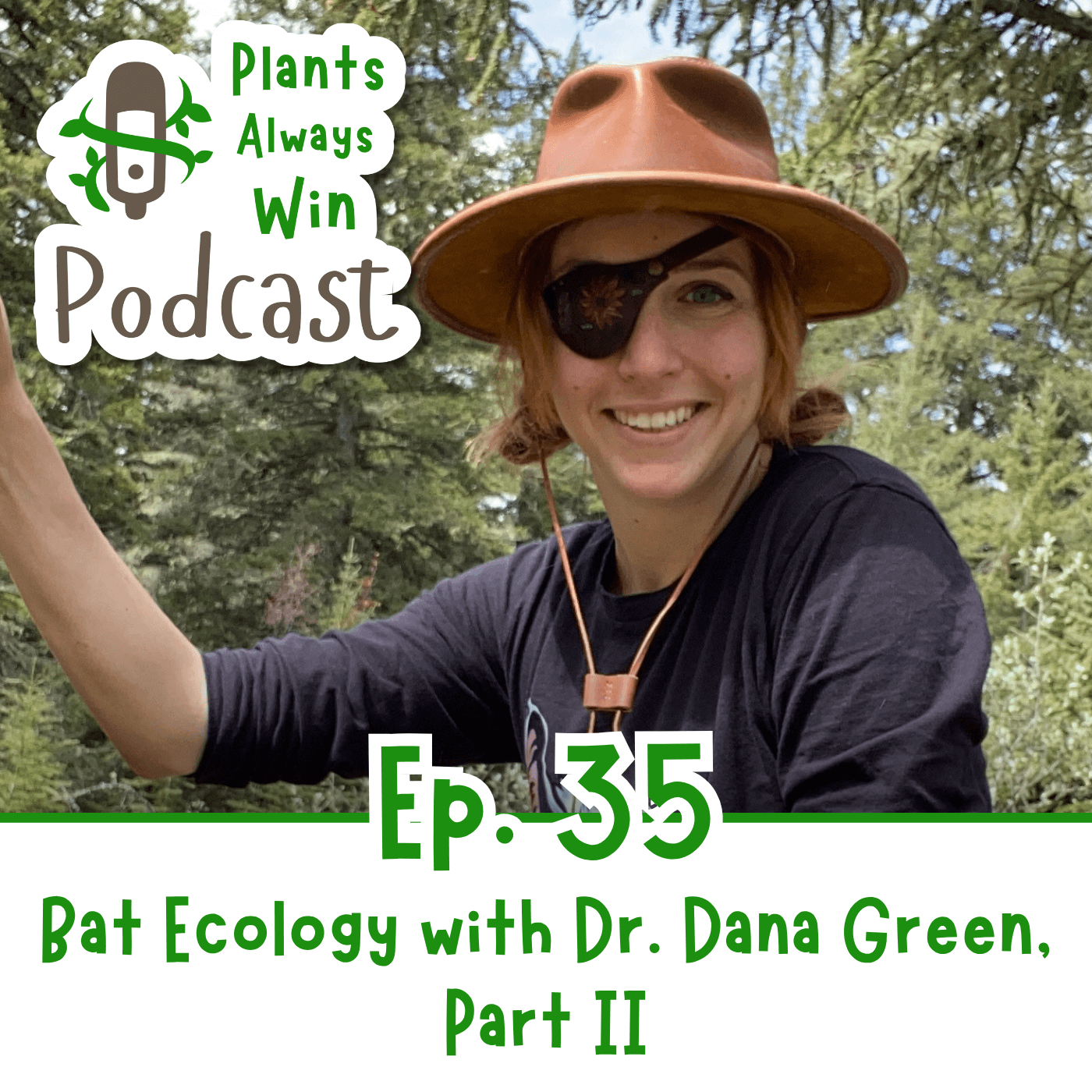
    Ep. 35 Bat Ecology with Dr. Dana Green Part 2

    Dr. Dana Green, a.k.a. “The Eyepatch Biologist” is back for part two! This free-flying conversation just couldn’t be contained to a single hour.

    We plunge straight in this week with an urgent question: how do bats relieve themselves without dribbling on their own heads? From there the facts come thick and fast: microchiroptera (our local insect-eating, echolocating bats) vs. megachiroptera (bigger fruit-eating bats from other climates that don’t echolocate); the truth about bats’ sense of sight; and the unexpected songs of silverhair bats. Dana shares how to attract bats to our properties without welcoming them into our homes, and we delve into the devastating consequences of pesticide use in the ecosystem—and how to report it when you witness someone applying pesticides illegally. 

    Throughout the interview we also get some of Dana’s opinions on the quality of bat representation in media, including Daredevil, Dungeons and Dragons, Batman and vampire books. The episode wraps up with a lightning round of facts, favourites, and myth busting—and a promise to bring Dana back for even more ecological eloquence in the future!

    Learn More:

    Dana’s website: https://www.danagreeneco.com/

    TikTok: https://www.tiktok.com/@theeyepatchbiologist

    Instagram: https://www.instagram.com/eyepatchbiologist/

    Comments? Feedback? Want your garden question to be featured in a future Q&A segment? 

    Email us, reach out over social media, or get Q&A priority by supporting us on Patreon.

    Bluesky: @plantsalwayswin.com

    TikTok: @plantsalwayswinpodcast

    YouTube: @PlantsAlwaysWinPodcast

    Website: www.plantsalwayswin.com

    Discord: https://discord.gg/K6wF9dY4Ja

    Timestamps

    00:12 Introduction

    01:00 How do Bats Relieve Themselves?

    01:58 Flying Foxes, or Megachiroptera, a Subgroup of Bats

    03:30 Bats Aren’t Blind

    04:48 Echolocation Representation in Daredevil

    06:00 Bats that Jam Each Other’s Echolocation Signals

    07:28 Singing Silverhair Bats

    10:25 Creating Bat Habitat at Your Home

    12:00 Pesticides in the Ecosystem

    20:15 Lightning Round

    20:28 Should We Be Concerned about Diseases in Bats?

    20:46 Are Bats Attracted to Long Hair?

    21:17 Do Bats Suck Blood? Should We Worry?

    23:03 Do Bats Mate for Life? What’s a Bat Leck?

    23:48 Hammerhead Bats’ Big Honkers

    24:40 The World’s Biggest Bat

    26:00 The World’s Smallest Bat

    28:39 Cutest Bat Struggles

    29:40 The World’s Ugliest (and Wrinkliest) Bat

    31:00 A Bat Scientist’s Opinion on Batman

    34:20 Great Bat Representation in Kids’ Books and Movies

    36:00 Dana’s Love of Vampires

    39:15 Find Dana Online

    41:44 Outro and Contact Us

  • Ep. 34 Bat Ecology with Dr. Dana Green, Part 1

    Ep. 34 Bat Ecology with Dr. Dana Green, Part 1

    Dr. Dana Green is a bat expert who is known online as The Eyepatch Biologist. As a science communicator, a pun connoisseur, and a woman who knows a good joke when it’s staring her in the face, she says of herself, “What a wonderful bat advocate to go half blind.”

    In Dana’s interview with Sean, she tells us about her master’s degree studying grasshopper mice (predatory, solitary, highly aggressive mice that howl) and her PhD in bat ecology, which she completed at the University of Regina in Saskatchewan. We learn about echolocation and other bat chatter, fact check Hank Green’s viral video (Do we know where bats go in winter? Not entirely…) and learn about bat species in Canada. We assuage some fears about bats carrying disease, explore the challenges of tracking bat migration, exclaim over the mysteries of bat reproduction, and celebrate their benefits in the garden. The episode is as wide-ranging as these fascinating mammals are, but we spend time especially on the lives of hoary bats, pallid bats, New Zealand’s flightless bats, and the Mexican free-tailed bat…or at least their smell! 

    Craving even more bat facts? Then you’re in luck! Part two of this interview will be posted next week. 

    Learn More

    Dana’s website: https://www.danagreeneco.com/

    TikTok: https://www.tiktok.com/@theeyepatchbiologist

    Instagram: https://www.instagram.com/eyepatchbiologist/

    Scientists and Communicators

    Sean and Dana drop a lot of names in this conversation. Here are the experts they mention: 

    Comments? Feedback? Want your garden question to be featured in a future Q&A segment?

    Email us, reach out over social media, or get Q&A priority by supporting us on Patreon.

    Bluesky: @plantsalwayswin.com

    TikTok: @plantsalwayswinpodcast

    YouTube: @PlantsAlwaysWinPodcast

    Website: www.plantsalwayswin.com

    Discord: https://discord.gg/K6wF9dY4Ja

    Citations

    Bat Reproduction Fact Check

    H, T. (2020, October 16). BAT Reproduction – Illinois BAT Conservation program. https://www.illinoisbats.org/bat-reproduction   

    Timestamps

    00:12 Introducing Dr. Dana Green

    01:36 Bats, Grasshopper Mice, and Going Feral: Dana’s Education Journey

    04:55 Sound Bite: Grasshopper Mouse

    05:01 Can You Hear Echolocation? 

    05:30 Sound Bite: Echolocation

    07:25 Dana’s Retinal Detachment

    15:40 Dana Caused Sean’s First TikTok Violation

    16:53 Bat Species in Canada

    19:00 The Bat Research Community

    21:30 Do We Know Where Bats Go In Winter?

    25:53 Bats’ Unique Relationship with Disease

    28:47 Tangent: Funding Rant

    31:00 Back to Bat Tracking

    34:45 Ted Weller, Bat Pregnancy, and Pups

    41:36 The Pallid Bat, Potential Pollinator and Centipede Eater

    44:00 Bats as Garden Friends

    47:33 Outdoor Cats are Ecological Disasters

    51:42 Bats’ Horrendous Smell

    53:46 Conclusion and Contact Us

  • Ep. 33 Establishing Apples, Eradicating Horsetail & Fertilizing Flowers

    Ep. 33 Establishing Apples, Eradicating Horsetail & Fertilizing Flowers

    Our gardens are winding down for the season, but our audience is putting on a growth spurt! This crop of new listeners has seeded our Q&A inbox with a flush of questions, which we love to see. And while we’d normally answer these at the end of our versus episodes, we currently have a backlog of recorded episodes and we don’t want folks to have to wait for answers. That means it’s time for another Q&A special!

    We start with questions inspired by Sean’s recent video about an apple tree sold with its graft and root flare buried well below soil level. If you want to understand how fruit trees are grafted and sold, how to plant them successfully, and what to expect from them as they grow, keep your ears peeled for this conversation.

    Next, we move on to plants that listeners are hoping to get rid of, touching briefly on bindweed (covered more thoroughly in episode 31) before digging into horsetail, that pervasive prehistoric plant. The question was “How do I get rid of it?” and we do address that—but you’ll find some options you might not have expected in our answers.

    Finally, we chat about an anecdote that was shared with us: “This year I learned that cosmos don’t like fertilizer.” It’s true that feeding nitrogen to flowering plants will push them to produce more greenery than blooms. But we’re here to offer some education on what you can do to give them a boost.

    Comments? Feedback? Want your garden question to be featured in a future Q&A segment? 

    Email us, reach out over social media, or get Q&A priority by supporting us on Patreon

    Discord: https://discord.gg/K6wF9dY4Ja

    Bluesky: @plantsalwayswin.com

    TikTok: @plantsalwayswinpodcast

    YouTube: @plantsalwayswinpodcast

    Website: www.plantsalwayswin.com 

    Learn More

    About Horsetail: https://www.rhs.org.uk/weeds/horsetail

    Find bare-root fruit trees grown in Ontario from:

    Golden Bough Tree Farm (Marlbank, ON, in Tweed): https://goldenboughtreefarm.ca/ 

    Northern Food Forest (Calvin, ON, near North Bay): https://northernfoodforest.ca/ 

    Pineneedle Farms (Pontypool, ON, within Kawartha Lakes: https://www.pineneedlefarms.ca/ 

    Silver Creek Nursery (Wellesley, Ontario, in the Waterloo region): https://silvercreeknursery.ca/

    Whiffletree Farm & Nursery (Elora, ON): https://www.whiffletreefarmandnursery.ca/ 

    Credits

    Website Design and Illustration by Sophia Alladin

    Intro and Outro Music from #Uppbeat (free for Creators!): https://uppbeat.io/t/soundroll/when-my-ukulele-plays

    License code: GWOIMMBAS15FG6PH

    Timestamps

    00:12 Intro

    00:55 What’s Growing On? Erin’s Fall Fair Entries

    04:46 What’s Growing On? Sean’s Fall Fruit Trees Planting

    08:50 Water Break

    10:42 Is a buried graft the reason my apple tree keeps dying?

    11:43 What is a root flare? 

    14:54 Do nurseries make mistakes like this on purpose to sell more trees?

    16:36 Will a tree always die if its graft is below ground level?

    19:07 If you let suckers from a root stock grow up, will they produce fruit?

    21:40 If the tree survives having its graft buried, is everything okay?

    23:00 I planted apples 3-4 years ago. They are suckering like crazy and haven’t produced any fruit. What can I do?

    25:45 What fruit tree is best to plant in Ontario – something hardy and not fussy?

    30:15 What if I need to eradicate field bindweed from my lawn instead of my garden?

    35:42 How can I get rid of horsetail? I tried replacing all my soil and it still came back.

    45:01 Fertilizing stopped my flowers from blooming. What should I have done?

    56:00 Outro and Contact Us

  • Ep. 32 Home Composting with Delaina Arnold

    Ep. 32 Home Composting with Delaina Arnold

    Do you make compost at home? Do you delight in the experience? If your answer to either of those questions is no, this week’s guest is here to help.

    Delaina Arnold is the community programs manager with the Georgian Bay Mnidoo Gamii Biosphere, a UNESCO-designated “ecologically significant” landscape where people are striving to live in balance with nature. As part of that striving, the Biosphere launched a pilot project in 2025 to help people learn about home composting, to get started doing it themselves, and to troubleshoot any problems. Now we get to benefit from all that education, as Delaina answers Erin’s questions on the subject.

    We begin with the big question: why bother rotting our kitchen scraps at all? Then it’s on to busting common myths before entering a crash course on home composting: where to place your bin, what type to make or buy, and how not to hate the container you use for collecting scraps. We troubleshoot common problems like wildlife, smell, and slow decomposition, then get into a tangent on the truth about using urine in your compost. Of course we also cover how to decompose your garden trimmings safely and what to do with manure. 

    Ready to make some black gold with us? Then dive in to the interview.

    Learn More

    “Do the Rot Thing” webinar: https://www.youtube.com/watch?v=74UODcc3IZE

    All the Biosphere’s short, downloadable gardening guides, including “Composting 101”: https://georgianbaybiosphere.com/gardens/

    The Biosphere’s community calendar: https://georgianbaybiosphere.com/events/     

    The Georgian Bay Biosphere Reserve website: https://georgianbaybiosphere.com/

    Citations

    Urine and Soil Study

    Rumeau, M., Pistocchi, C., Ait-Mouheb, N., Marsden, C., & Brunel, B. (2024). Unveiling the impact of human urine fertilization on soil bacterial communities: A path toward sustainable fertilization. Applied Soil Ecology, 201, 105471. https://doi.org/10.1016/j.apsoil.2024.105471

    Follow the Biosphere On Social Media

    On Facebook: https://www.facebook.com/gbtownship/ 

    On YouTube: https://www.youtube.com/@GBayBiosphere 

    Comments? Feedback? Want your garden question to be featured in a future Q&A segment? 

    Email us, reach out over social media, or get Q&A priority by supporting us on Patreon

    Discord: https://discord.gg/K6wF9dY4Ja

    Bluesky: @plantsalwayswin.com

    TikTok: @plantsalwayswinpodcast

    YouTube: @plantsalwayswinpodcast

    Website: www.plantsalwayswin.com 

    Credits

    Website Design and Illustration by Sophia Alladin

    Intro and Outro Music from #Uppbeat (free for Creators!): https://uppbeat.io/t/soundroll/when-my-ukulele-plays

    License code: GWOIMMBAS15FG6PH

    Timestamps

    00:12 Intro

    00:47 Meet Delaina Arnold of the Georgian Bay Biosphere

    01:50 What is the Georgian Bay Biosphere Reserve?

    05:08 Why Home Composting Matters: Landfills, Methane, and Soil

    09:09 The Seguin & Township of Georgian Bay Kitchen to Compost Pilot Project

    11:33 Myths about Home Composting: Wildlife, Stirring, and What to Add

    14:47 What if You Don’t Turn Your Compost? Erin’s Dirty, Little Secret

    16:35 Where to Locate Your Compost Bin: Sun, Drainage, and Access

    18:14 Choosing Your Compost Bin

    20:09 Pick a Cute Countertop Compost Container

    22:30 Composting Tips

    23:27 Composting Troubleshooting

    25:15 Wildlife Problems with Compost

    29:19 Fact Check: Adding Urine to Compost

    32:20 Brown Materials You Can Add

    34:05 Can You Add Garden Clippings to Your Compost Bin? 

    37:45 Resources and Contact for the Georgian Bay Biosphere

    39:30 Outro and Contact Us