Category: Episode

Audio recordings and show notes for individual episodes of the Plants Always Win podcast

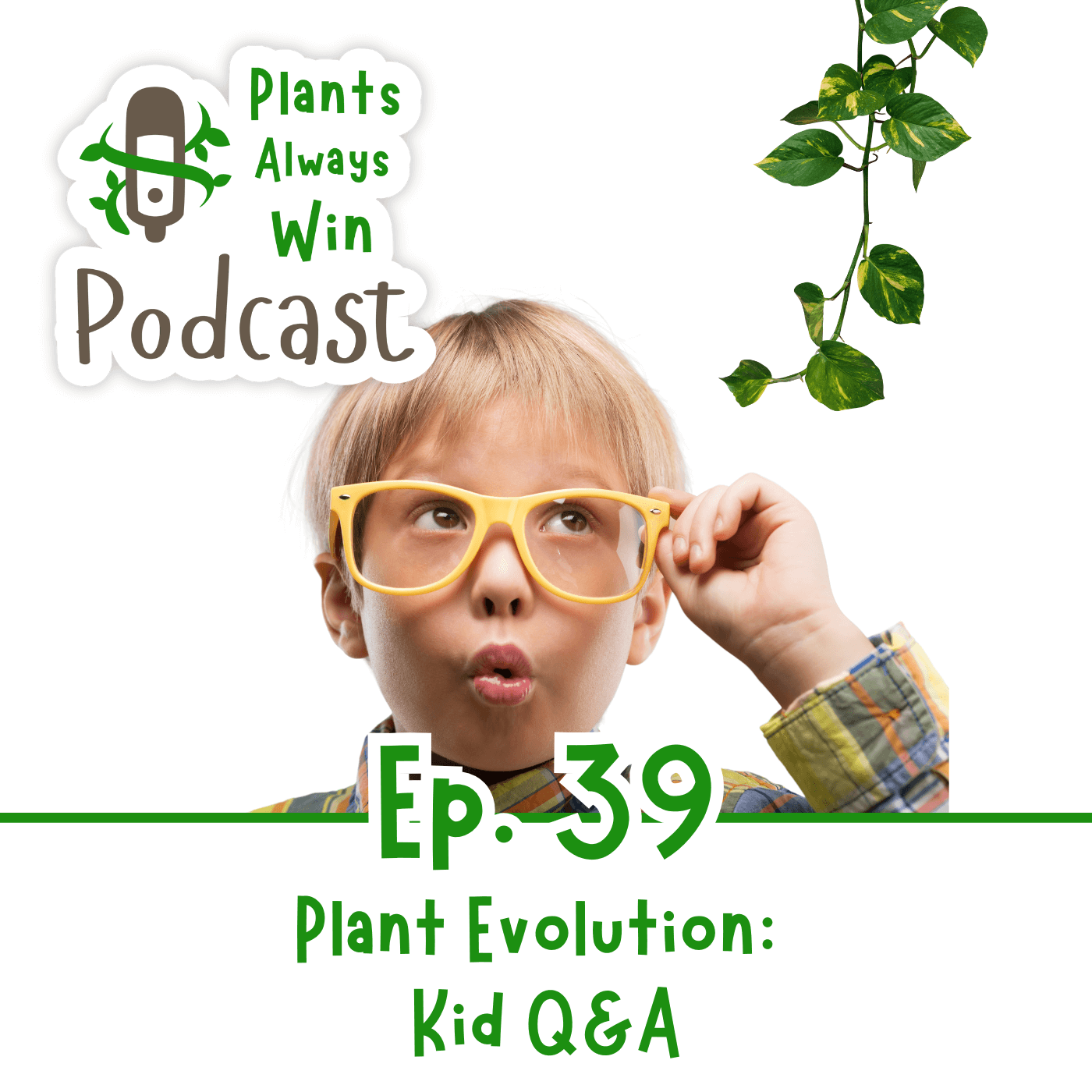
  • Ep. 39 Plant Evolution: Kid Q&A

    Ep. 39 Plant Evolution: Kid Q&A

    Kids ask the best nature questions!

    For this episode, a class of elementary-school students prepared a list of questions about plants for Sean and Erin to answer. The best part, of course, is that these are questions few adults would think to ask, and they let our hosts explore all sorts of fascinating topics. How did plants come to be the way they are? Why did they evolve to have roots (or no roots!) and leaves and fruit? What makes one tree grow big leaves while another one has narrow needles? We talk evolutionary niches, the tree of life, food chains, and even how plants move water and sugar through their cells. 

    Step into our plant-life classroom and see what you can learn from the curiosity of children!

    Comments? Feedback? Want your garden question to be featured in a future Q&A segment? 

    Email us, reach out over social media, or get Q&A priority by supporting us on Patreon

    Discord: https://discord.gg/K6wF9dY4Ja
    Bluesky: @plantsalwayswin.com
    TikTok: @plantsalwayswinpodcast
    YouTube: @plantsalwayswinpodcast
    Website: www.plantsalwayswin.com 

    Credits
    Website Design and Illustration by Sophia Alladin

    Intro and Outro Music from #Uppbeat (free for Creators!): https://uppbeat.io/t/soundroll/when-my-ukulele-plays

    License code: GWOIMMBAS15FG6PH

    Citations

    Bryophytes and Tracheophytes? Categories of Plants With and Without Roots
    Plant diversity. (n.d.). NatureWorks. https://nhpbs.org/natureworks/nwep14b.htm 

    The Parts of a Leaf
    Libretexts. (2022, May 4). 13.1: Leaf parts and arrangement. Biology LibreTexts. https://bio.libretexts.org/Bookshelves/Botany/A_Photographic_Atlas_for_Botany_(Morrow)/13%3A_Leaves/13.01%3A_Leaf_Parts_and_Arrangement 

    Making Paper from Plants at Home

    Quillen, K. (2023, October 3). How to make paper from plants – Mother Earth news. Mother Earth News – the Original Guide to Living Wisely. https://www.motherearthnews.com/diy/making-paper-from-plants-zm0z17jjzqui/

    Lipman, B. (2024, October 16). Paper from Iris and Daylily. https://www.handpapermaking.org/post/paper-from-iris-and-daylily 

    Timestamps

    00:13 Introduction
    01:13 What’s Growing On: Sean’s Seed Saving
    02:56 What’s Growing On: Erin’s Season Extension
    05:53 Do All Plants Have Roots? Let’s Talk Bryophytes
    06:08 Plants’ Vascular Systems: Xylem and Phloem
    08:40 Why Do Plants Need Roots?
    11:15 Many Types of Roots
    12:29 What is the Blade on a Leaf?
    14:40 Why do Oak Leaves Get So Big?
    20:22 How Fast Can Some Flowers Grow?
    26:17 Why Do Plants Grow Food?
    32:51 How Do Plants Survive the Winter?
    41:38 Erin’s New Picture Book: If You Go Walking
    42:58 How Do You Make Paper with Plants?
    46:10 Paper Recycling Tangent
    47:06 Making Paper from Daylilies and Iris
    54:33 Outro and Contact Us

  • Ep. 38 Little Shop of Horrors

    Ep. 38 Little Shop of Horrors

    This episode is what happens when two people’s loves for venus flytraps, spooky season, and movie musicals collide. 

    Yes, we’re doing nerdy Halloween horticulture by analyzing the representation of carnivorous plants in the classic musical Little Shop of Horrors—specifically the 1986 movie version. If you  haven’t seen the show, don’t worry; we set the stage for you and save any late-story spoilers for the very end. For the most part, we’re interested in one question: based on our knowledge of real-world carnivorous plants, how reasonable were Seymore’s guesses when he first tried to care for Audrey II? This requires, of course, an exploration of Venus flytraps’ habitat and habits, how they reproduce, and of the care they need to thrive in our homes. 

    The movie does raise one more hypothetical, and I’ll put this in code for our listeners who still need to watch it: that ending. Would it really have worked? We get a buzz out of exploring the idea.

    Comments? Feedback? Want your garden question to be featured in a future Q&A segment? 

    Email us, reach out over social media, or get Q&A priority by supporting us on Patreon

    Discord: https://discord.gg/K6wF9dY4Ja

    Bluesky: @plantsalwayswin.com

    TikTok: @plantsalwayswinpodcast

    YouTube: @plantsalwayswinpodcast

    Website: www.plantsalwayswin.com 

    Credits

    Website Design and Illustration by Sophia Alladin

    Intro and Outro Music from #Uppbeat (free for Creators!): https://uppbeat.io/t/soundroll/when-my-ukulele-plays

    License code: GWOIMMBAS15FG6PH

    Citations

    Little Shop of Horrors

    Oz, F. (Director). (1986). Little shop of horrors. The Geffen Company.

    Venus flytrap Overview

    Venus flytrap (Dionaea muscipula). (n.d.). iNaturalist. https://www.inaturalist.org/taxa/52666-Dionaea-muscipula

    Venus flytraps benefit from fires

    Venus Flytrap. (n.d.). National Wildlife Federation. https://www.nwf.org/Educational-Resources/Wildlife-Guide/Plants-and-Fungi/Venus-Flytrap

    A chemical signal from the flytrap’s prey stimulates the secretion of enzymes.

    Lady Bird Johnson Wildflower Center – the University of Texas at Austin. (n.d.). https://www.wildflower.org/plants/result.php?id_plant=dimu4

    Overwintering your venus flytrap

    Little Shop of Horrors. (2025, January 12). Overwintering Venus flytraps. Littleshopofhorrors.co.uk. https://www.littleshopofhorrors.co.uk/over-wintering-venus-flytraps/ 

    Timestamps

    00:39 Introduction

    01:35 What’s Growing On: Sean’s Winter Prep

    02:20 What’s Growing On: Erin’s Tomatoes and Greenhouse Build

    03:10 Sean’s Pumpkin-Deer Showdown

    05:48 Water Break

    06:00 Setting the Scene: Little Shop of Horrors

    07:44 How Carnivorous Plants Eat

    11:26 Can a Carnivorous Plant Survive on Human Blood?

    12:46 Venus Fly Trap Etymology

    15:50 How the Venus Fly Trap Grows

    18:35 Audrey II’s Structure vs. Venus Fly Trap Structure

    21:39 Taking Care of Audrey II vs. a Venus Fly Trap

    32:24 Overwintering Your Venus Fly Trap

    34:51 SPOILER WATER BREAK

    35:20 Propagating a Venus Fly Trap vs. Audrey II

    41:28 Ethical Purchasing of Venus Fly Traps

    42:49 Buying Cool Cultivated Varieties

    43:33 Can You Kill a Plant with Electrocution?

    47:29 Conclusion and Contact Us

  • Ep. 37 Sunflower vs. Sunchoke

    Ep. 37 Sunflower vs. Sunchoke

    It’s the versus episode they said couldn’t be done.

    Well, okay, not sure who “they” are, but something has certainly been conspiring against it. We first attempted an episode on sunchokes, also known as Jerusalem artichokes, in the fall of 2024, before Plants Always Win was launched. It got left on the cutting room floor. Then in September of this year we recorded a proper Sunchokes vs. Sunflowers face-off, spending two hours in the recording studio. 

    We later found out that Sean’s audio had quit after six minutes.

    But if you’re reading these words, we have finally succeeded! With the last of the warm autumn sunshine, we are bringing you sunflowers vs. sunchokes. Or, to put it another way, annual sunflowers vs. one of their many perennial sunflower cousins. Both are native to North America, and both are prolific food crops. The first, though, has been bred for its seed while the second is used for its tubers. And only one of them was at the centre of a $25 million scam that threw parts of the United States and Canada into an uproar in the 1980s. 

    Find out which one that is one by listening…and then reach out by email or social media to tell us which sunflower YOU feel won this week’s plant face-off.

    The Horti Awards

    Vote for Wait Like a Seed at bit.ly/hortiawards. Scroll to the very bottom and select it from the Books drop-down menu. You don’t have to vote in every category.

    Comments? Feedback? Want your garden question to be featured in a future Q&A segment? 

    Email us, reach out over social media, or get Q&A priority by supporting us on Patreon

    Discord: https://discord.gg/K6wF9dY4Ja

    Bluesky: @plantsalwayswin.com

    TikTok: @plantsalwayswinpodcast

    YouTube: @plantsalwayswinpodcast

    Website: www.plantsalwayswin.com 

    Credits

    Website Design and Illustration by Sophia Alladin

    Intro and Outro Music from #Uppbeat (free for Creators!): https://uppbeat.io/t/soundroll/when-my-ukulele-plays

    License code: GWOIMMBAS15FG6PH

    Citations

    Sunflower etymology

    Sunflower – Etymology, Origin & Meaning. (n.d.). Etymonline. https://www.etymonline.com/word/sunflower

    Sunflowers as composite flowers

    Common sunflower. (n.d.). https://www.fs.usda.gov/wildflowers/plant-of-the-week/helianthus_annuus.shtml 

    Sunflowers in Ontario

    top Native Sunflowers for Ontario Gardens — In Our Nature. (n.d.). In Our Nature. https://www.inournature.ca/sunflowers-of-ontario

    The too-many-to-read-out traditional uses of the annual sunflower

    USDA, NRCS, National Plant Data Center. (n.d.). ANNUAL SUNFLOWER. https://plants.usda.gov/DocumentLibrary/plantguide/pdf/pg_hean3.pdf 

    Sunflower oil chemistry and uses

    Sunflower oil. (n.d.). Science Direct. Retrieved September 30, 2025, from https://www.sciencedirect.com/topics/chemical-engineering/sunflower-oil 

    Growing sunflowers

    Spengler, T. (2023, February 10). Sunflower planting pros and cons. Gardening Know How. https://www.gardeningknowhow.com/gardening-pros-cons/sunflower-planting-pros-and-cons 

    Allelopathy

    Allelopathy. (n.d.). Science Direct. Retrieved September 30, 2025, from https://www.sciencedirect.com/topics/agricultural-and-biological-sciences/allelopathy  

    The world’s tallest sunflower

    Associated Press. (2025, September 15). World’s tallest sunflower blooms in an Indiana backyard as a tribute to Ukraine. Spectrum News 1. https://spectrumnews1.com/oh/columbus/news/2025/09/15/world-s-tallest-sunflower-indiana

    Anishinaabe use of sunchokes, a.k.a. Giisisoojiibik

    Geniusz, M. S. (2015). Plants have so much to give us, all we have to do is ask: Anishinaabe Botanical Teachings. U of Minnesota Press. 

    The Jerusalem artichoke multi-level marketing scam

    1980s Farm Crisis: Origins, myths and realities: Jerusalem artichoke miracle crop was a sign – Agweek | #1 source for agriculture news, farming, markets. (2023, June 12). Agweek. https://www.agweek.com/business/1980s-farm-crisis-origins-myths-and-realities-jerusalem-artichoke-miracle-crop-was-a-sign 

    The Great Jerusalem Artichoke Circus: The Buying and Selling of the Rural American Dream, by Joseph A. Amato, 1993, University of Minnesota Press, 280 p. 

    Identify your turfgrass

    Different types of grass: Identifying your lawn’s grass type. (n.d.). Scotts. https://scotts.com/en-us/learn/different-types-of-grass-identify-your-grass.html 

    Timestamps

    00:40 The Sunchoke Curse

    02:29 What’s Growing On: Erin’s Garden-Fresh Meals and Horti Awards

    04:20 What’s Growing On: Sean’s 1,001 Projects and Propagations

    06:00 Water Break

    06:15 The Plant Face-Off: Sunflowers

    07:51 About the Name Sunflower

    08:13 How Sunflowers Grow

    08:55 Perennial Sunflowers of Ontario

    10:25 Uses of the Annual Sunflower

    12:00 Sunflowers are Composite Flowers

    12:45 Heliotropism and Phototropism

    14:35 The Benefits of Heliotropism

    15:50 Sunflowers and Allelopathy

    18:06 A Sunflower Guild

    19:40 Garden-Nerd D&D Tangent

    24:12 The Plant Face-Off: Sunchokes

    24:45 The Only Tuberous Sunflowers

    25:14 Eating Sunchoke Tubers…Without the Gas

    26:25 Harvesting and Managing the Tubers

    29:20 Anishinaabe Communities and Giisisoojiibik

    30:30 Sunchokes’ Invasiveness in Central Europe

    31:00 Get Familiar with New Foods You Can Grow

    33:45 Jerusalem Artichoke Height and Appearance

    35:49 The Jerusalem Artichoke Pyramid Scheme

    42:00 Musings About Fuel from Sunflowers

    45:59 Listener Question: How Do I Know What Kind of Grass I Have?

    51:55 Conclusion and Contact Us

  • Ep. 36 Community Gardens with Jessica Letteer

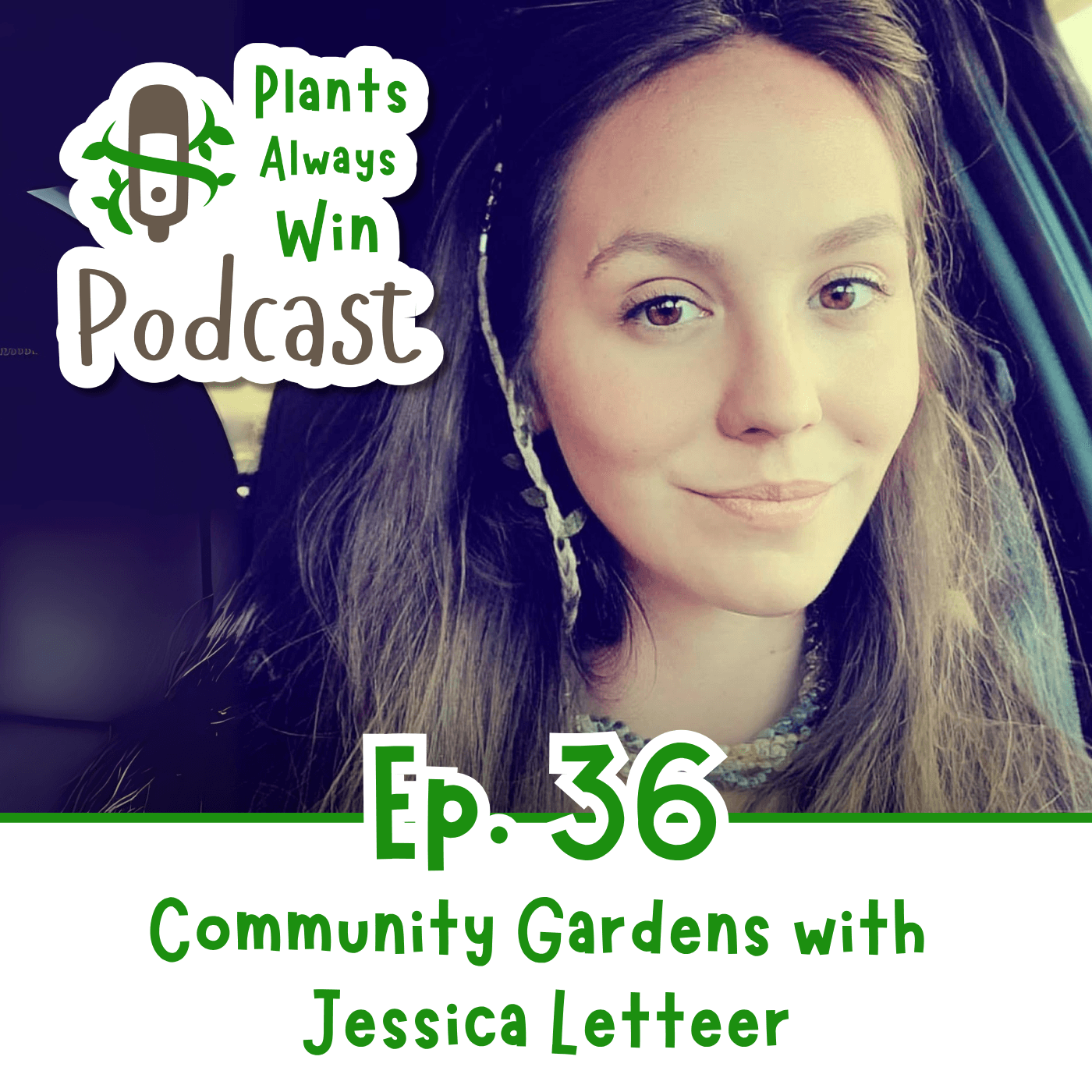
    Ep. 36 Community Gardens with Jessica Letteer

    This episode is for anyone who has ever daydreamed about starting a community garden and for anyone who needs the boost of a good-news gardening story.  

    Our guest is Jessica Letteer, who founded the Wilkes-Barre Area Community Gardens five years ago and kicked off a local movement of soil building and community gardening in an area marked by poverty, blighted soil, and food deserts. Jess’ home in Pennsylvania’s Wyoming Valley bears the contamination left behind by abandoned coal mines, and services and infrastructure are chronically under-resourced. But she and a small group of other volunteers reached out to their city council, solicited donations, and started a program that now grows and distributes food, teaches regenerative agriculture skills, and puts on community events—all for free. 

    Longtime listeners will know that our co-host Erin Alladin also founded a community garden: Garden@Kimbourne Community Permaculture Project in Toronto, Ontario. In this episode, she and Jess compare notes on the steps they each took to start their projects and how they and their fellow volunteers kept them going. Jess also tells us about the process of establishing a nonprofit, about the other community organizations her group has partnered with, the ways they’re funding the garden, and—of course—all the incredible projects they have lined up for the future.

    Learn More:

    The Wilkes-Barre Area Community Gardens Facebook Page: https://www.facebook.com/groups/wilkesbarreacg/

    Organizations Named in this Episode

    Eastern Pennsylvania Coalition for Abandoned Mine Reclamation: https://epcamr.org/home/ 

    Food Dignity: https://fooddignitymovement.org/ 

    Rising Tide Wellness: https://risingtide-wellness.org/ 

    WIC: https://www.fns.usda.gov/wic 

    The Horti Awards

    Vote for Wait Like a Seed here! Scroll to the very bottom and select it from the Books drop-down menu. You don’t have to vote in every category.

    Comments? Feedback? Want your garden question to be featured in a future Q&A segment? 

    Email us, reach out over social media, or get Q&A priority by supporting us on Patreon.

    Bluesky: @plantsalwayswin.com

    TikTok: @plantsalwayswinpodcast

    YouTube: @PlantsAlwaysWinPodcast

    Website: www.plantsalwayswin.com

    Discord: https://discord.gg/K6wF9dY4Ja

    Timestamps

    00:14 Introduction to Jessica Letteer

    02:12 Introduction to Wilkes-Barre Area Community Gardens

    03:35 How Wilkes-Barre Area Community Gardens Got Their Start

    08:19 How Garden@Kimbourne Got its Start

    09:58 Water Break: Wait Like a Seed and the Horti Awards

    10:33 Concerns about Crime and Community Gardens

    12:67 Healing the Community through Gardening

    13:55 Becoming a Nonprofit

    15:01 Partnering with Other Organizations

    17:50 Food Dignity: Paying Farmers, Feeding People for Free

    19:55 More Energy and Infrastructure Projects in the Gardens

    21:55 Why Is Running All This With You???

    25:36 Funding!

    26:44 Gardening in a Former Coal Town

    32:27 Creating an Accessible Garden for People with Disabilities

    35:15 What’s Next for Wilkes-Barre Community Gardens

    36:18 Find The Garden Community Online

    37:00 Shout-Outs

    38:58 Outro and Contact Us

  • Ep. 35 Bat Ecology with Dr. Dana Green Part 2

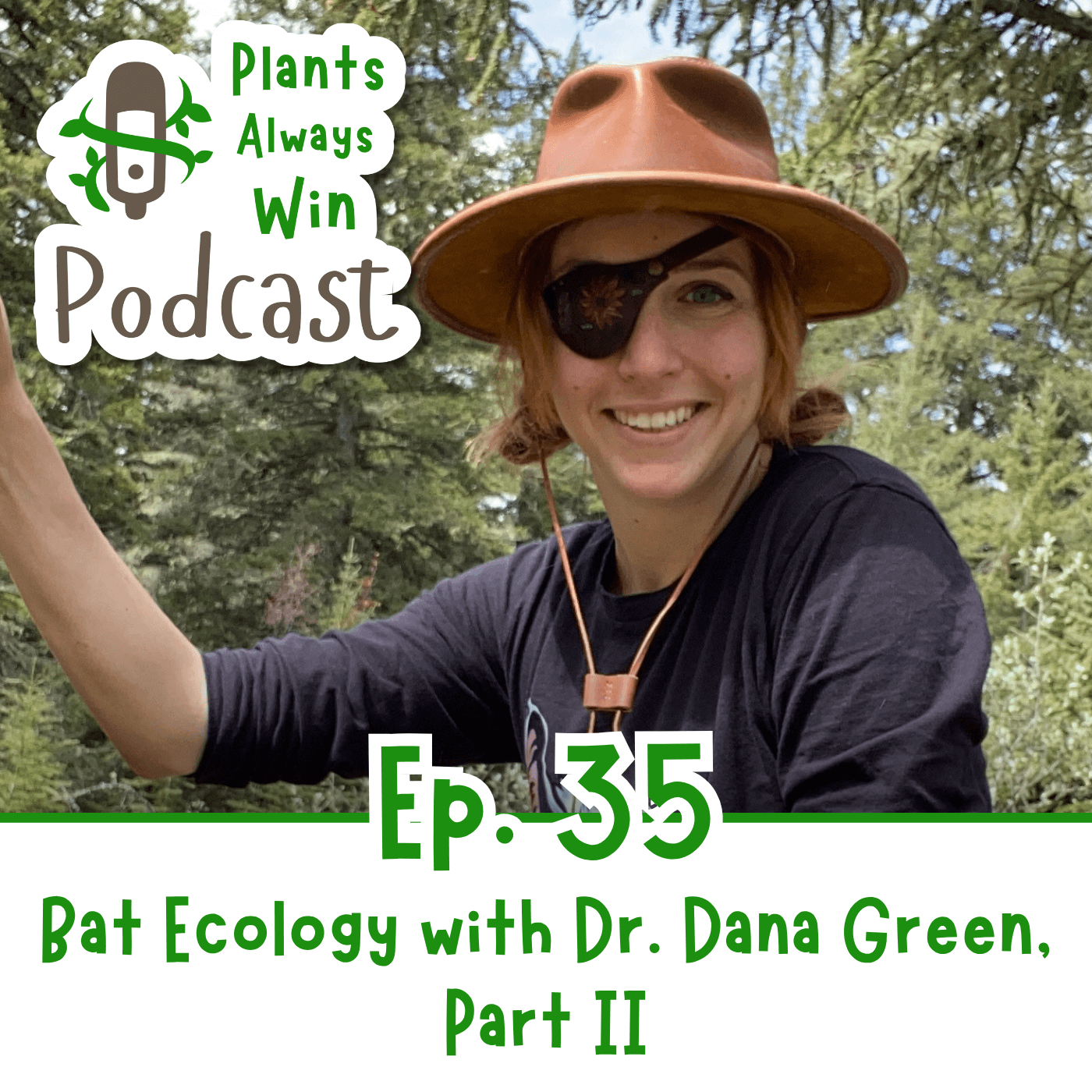
    Ep. 35 Bat Ecology with Dr. Dana Green Part 2

    Dr. Dana Green, a.k.a. “The Eyepatch Biologist” is back for part two! This free-flying conversation just couldn’t be contained to a single hour.

    We plunge straight in this week with an urgent question: how do bats relieve themselves without dribbling on their own heads? From there the facts come thick and fast: microchiroptera (our local insect-eating, echolocating bats) vs. megachiroptera (bigger fruit-eating bats from other climates that don’t echolocate); the truth about bats’ sense of sight; and the unexpected songs of silverhair bats. Dana shares how to attract bats to our properties without welcoming them into our homes, and we delve into the devastating consequences of pesticide use in the ecosystem—and how to report it when you witness someone applying pesticides illegally. 

    Throughout the interview we also get some of Dana’s opinions on the quality of bat representation in media, including Daredevil, Dungeons and Dragons, Batman and vampire books. The episode wraps up with a lightning round of facts, favourites, and myth busting—and a promise to bring Dana back for even more ecological eloquence in the future!

    Learn More:

    Dana’s website: https://www.danagreeneco.com/

    TikTok: https://www.tiktok.com/@theeyepatchbiologist

    Instagram: https://www.instagram.com/eyepatchbiologist/

    Comments? Feedback? Want your garden question to be featured in a future Q&A segment? 

    Email us, reach out over social media, or get Q&A priority by supporting us on Patreon.

    Bluesky: @plantsalwayswin.com

    TikTok: @plantsalwayswinpodcast

    YouTube: @PlantsAlwaysWinPodcast

    Website: www.plantsalwayswin.com

    Discord: https://discord.gg/K6wF9dY4Ja

    Timestamps

    00:12 Introduction

    01:00 How do Bats Relieve Themselves?

    01:58 Flying Foxes, or Megachiroptera, a Subgroup of Bats

    03:30 Bats Aren’t Blind

    04:48 Echolocation Representation in Daredevil

    06:00 Bats that Jam Each Other’s Echolocation Signals

    07:28 Singing Silverhair Bats

    10:25 Creating Bat Habitat at Your Home

    12:00 Pesticides in the Ecosystem

    20:15 Lightning Round

    20:28 Should We Be Concerned about Diseases in Bats?

    20:46 Are Bats Attracted to Long Hair?

    21:17 Do Bats Suck Blood? Should We Worry?

    23:03 Do Bats Mate for Life? What’s a Bat Leck?

    23:48 Hammerhead Bats’ Big Honkers

    24:40 The World’s Biggest Bat

    26:00 The World’s Smallest Bat

    28:39 Cutest Bat Struggles

    29:40 The World’s Ugliest (and Wrinkliest) Bat

    31:00 A Bat Scientist’s Opinion on Batman

    34:20 Great Bat Representation in Kids’ Books and Movies

    36:00 Dana’s Love of Vampires

    39:15 Find Dana Online

    41:44 Outro and Contact Us

  • Ep. 34 Bat Ecology with Dr. Dana Green, Part 1

    Ep. 34 Bat Ecology with Dr. Dana Green, Part 1

    Dr. Dana Green is a bat expert who is known online as The Eyepatch Biologist. As a science communicator, a pun connoisseur, and a woman who knows a good joke when it’s staring her in the face, she says of herself, “What a wonderful bat advocate to go half blind.”

    In Dana’s interview with Sean, she tells us about her master’s degree studying grasshopper mice (predatory, solitary, highly aggressive mice that howl) and her PhD in bat ecology, which she completed at the University of Regina in Saskatchewan. We learn about echolocation and other bat chatter, fact check Hank Green’s viral video (Do we know where bats go in winter? Not entirely…) and learn about bat species in Canada. We assuage some fears about bats carrying disease, explore the challenges of tracking bat migration, exclaim over the mysteries of bat reproduction, and celebrate their benefits in the garden. The episode is as wide-ranging as these fascinating mammals are, but we spend time especially on the lives of hoary bats, pallid bats, New Zealand’s flightless bats, and the Mexican free-tailed bat…or at least their smell! 

    Craving even more bat facts? Then you’re in luck! Part two of this interview will be posted next week. 

    Learn More

    Dana’s website: https://www.danagreeneco.com/

    TikTok: https://www.tiktok.com/@theeyepatchbiologist

    Instagram: https://www.instagram.com/eyepatchbiologist/

    Scientists and Communicators

    Sean and Dana drop a lot of names in this conversation. Here are the experts they mention: 

    Comments? Feedback? Want your garden question to be featured in a future Q&A segment?

    Email us, reach out over social media, or get Q&A priority by supporting us on Patreon.

    Bluesky: @plantsalwayswin.com

    TikTok: @plantsalwayswinpodcast

    YouTube: @PlantsAlwaysWinPodcast

    Website: www.plantsalwayswin.com

    Discord: https://discord.gg/K6wF9dY4Ja

    Citations

    Bat Reproduction Fact Check

    H, T. (2020, October 16). BAT Reproduction – Illinois BAT Conservation program. https://www.illinoisbats.org/bat-reproduction   

    Timestamps

    00:12 Introducing Dr. Dana Green

    01:36 Bats, Grasshopper Mice, and Going Feral: Dana’s Education Journey

    04:55 Sound Bite: Grasshopper Mouse

    05:01 Can You Hear Echolocation? 

    05:30 Sound Bite: Echolocation

    07:25 Dana’s Retinal Detachment

    15:40 Dana Caused Sean’s First TikTok Violation

    16:53 Bat Species in Canada

    19:00 The Bat Research Community

    21:30 Do We Know Where Bats Go In Winter?

    25:53 Bats’ Unique Relationship with Disease

    28:47 Tangent: Funding Rant

    31:00 Back to Bat Tracking

    34:45 Ted Weller, Bat Pregnancy, and Pups

    41:36 The Pallid Bat, Potential Pollinator and Centipede Eater

    44:00 Bats as Garden Friends

    47:33 Outdoor Cats are Ecological Disasters

    51:42 Bats’ Horrendous Smell

    53:46 Conclusion and Contact Us

  • Ep. 33 Establishing Apples, Eradicating Horsetail & Fertilizing Flowers

    Ep. 33 Establishing Apples, Eradicating Horsetail & Fertilizing Flowers

    Our gardens are winding down for the season, but our audience is putting on a growth spurt! This crop of new listeners has seeded our Q&A inbox with a flush of questions, which we love to see. And while we’d normally answer these at the end of our versus episodes, we currently have a backlog of recorded episodes and we don’t want folks to have to wait for answers. That means it’s time for another Q&A special!

    We start with questions inspired by Sean’s recent video about an apple tree sold with its graft and root flare buried well below soil level. If you want to understand how fruit trees are grafted and sold, how to plant them successfully, and what to expect from them as they grow, keep your ears peeled for this conversation.

    Next, we move on to plants that listeners are hoping to get rid of, touching briefly on bindweed (covered more thoroughly in episode 31) before digging into horsetail, that pervasive prehistoric plant. The question was “How do I get rid of it?” and we do address that—but you’ll find some options you might not have expected in our answers.

    Finally, we chat about an anecdote that was shared with us: “This year I learned that cosmos don’t like fertilizer.” It’s true that feeding nitrogen to flowering plants will push them to produce more greenery than blooms. But we’re here to offer some education on what you can do to give them a boost.

    Comments? Feedback? Want your garden question to be featured in a future Q&A segment? 

    Email us, reach out over social media, or get Q&A priority by supporting us on Patreon

    Discord: https://discord.gg/K6wF9dY4Ja

    Bluesky: @plantsalwayswin.com

    TikTok: @plantsalwayswinpodcast

    YouTube: @plantsalwayswinpodcast

    Website: www.plantsalwayswin.com 

    Learn More

    About Horsetail: https://www.rhs.org.uk/weeds/horsetail

    Find bare-root fruit trees grown in Ontario from:

    Golden Bough Tree Farm (Marlbank, ON, in Tweed): https://goldenboughtreefarm.ca/ 

    Northern Food Forest (Calvin, ON, near North Bay): https://northernfoodforest.ca/ 

    Pineneedle Farms (Pontypool, ON, within Kawartha Lakes: https://www.pineneedlefarms.ca/ 

    Silver Creek Nursery (Wellesley, Ontario, in the Waterloo region): https://silvercreeknursery.ca/

    Whiffletree Farm & Nursery (Elora, ON): https://www.whiffletreefarmandnursery.ca/ 

    Credits

    Website Design and Illustration by Sophia Alladin

    Intro and Outro Music from #Uppbeat (free for Creators!): https://uppbeat.io/t/soundroll/when-my-ukulele-plays

    License code: GWOIMMBAS15FG6PH

    Timestamps

    00:12 Intro

    00:55 What’s Growing On? Erin’s Fall Fair Entries

    04:46 What’s Growing On? Sean’s Fall Fruit Trees Planting

    08:50 Water Break

    10:42 Is a buried graft the reason my apple tree keeps dying?

    11:43 What is a root flare? 

    14:54 Do nurseries make mistakes like this on purpose to sell more trees?

    16:36 Will a tree always die if its graft is below ground level?

    19:07 If you let suckers from a root stock grow up, will they produce fruit?

    21:40 If the tree survives having its graft buried, is everything okay?

    23:00 I planted apples 3-4 years ago. They are suckering like crazy and haven’t produced any fruit. What can I do?

    25:45 What fruit tree is best to plant in Ontario – something hardy and not fussy?

    30:15 What if I need to eradicate field bindweed from my lawn instead of my garden?

    35:42 How can I get rid of horsetail? I tried replacing all my soil and it still came back.

    45:01 Fertilizing stopped my flowers from blooming. What should I have done?

    56:00 Outro and Contact Us

  • Ep. 32 Home Composting with Delaina Arnold

    Ep. 32 Home Composting with Delaina Arnold

    Do you make compost at home? Do you delight in the experience? If your answer to either of those questions is no, this week’s guest is here to help.

    Delaina Arnold is the community programs manager with the Georgian Bay Mnidoo Gamii Biosphere, a UNESCO-designated “ecologically significant” landscape where people are striving to live in balance with nature. As part of that striving, the Biosphere launched a pilot project in 2025 to help people learn about home composting, to get started doing it themselves, and to troubleshoot any problems. Now we get to benefit from all that education, as Delaina answers Erin’s questions on the subject.

    We begin with the big question: why bother rotting our kitchen scraps at all? Then it’s on to busting common myths before entering a crash course on home composting: where to place your bin, what type to make or buy, and how not to hate the container you use for collecting scraps. We troubleshoot common problems like wildlife, smell, and slow decomposition, then get into a tangent on the truth about using urine in your compost. Of course we also cover how to decompose your garden trimmings safely and what to do with manure. 

    Ready to make some black gold with us? Then dive in to the interview.

    Learn More

    “Do the Rot Thing” webinar: https://www.youtube.com/watch?v=74UODcc3IZE

    All the Biosphere’s short, downloadable gardening guides, including “Composting 101”: https://georgianbaybiosphere.com/gardens/

    The Biosphere’s community calendar: https://georgianbaybiosphere.com/events/     

    The Georgian Bay Biosphere Reserve website: https://georgianbaybiosphere.com/

    Citations

    Urine and Soil Study

    Rumeau, M., Pistocchi, C., Ait-Mouheb, N., Marsden, C., & Brunel, B. (2024). Unveiling the impact of human urine fertilization on soil bacterial communities: A path toward sustainable fertilization. Applied Soil Ecology, 201, 105471. https://doi.org/10.1016/j.apsoil.2024.105471

    Follow the Biosphere On Social Media

    On Facebook: https://www.facebook.com/gbtownship/ 

    On YouTube: https://www.youtube.com/@GBayBiosphere 

    Comments? Feedback? Want your garden question to be featured in a future Q&A segment? 

    Email us, reach out over social media, or get Q&A priority by supporting us on Patreon

    Discord: https://discord.gg/K6wF9dY4Ja

    Bluesky: @plantsalwayswin.com

    TikTok: @plantsalwayswinpodcast

    YouTube: @plantsalwayswinpodcast

    Website: www.plantsalwayswin.com 

    Credits

    Website Design and Illustration by Sophia Alladin

    Intro and Outro Music from #Uppbeat (free for Creators!): https://uppbeat.io/t/soundroll/when-my-ukulele-plays

    License code: GWOIMMBAS15FG6PH

    Timestamps

    00:12 Intro

    00:47 Meet Delaina Arnold of the Georgian Bay Biosphere

    01:50 What is the Georgian Bay Biosphere Reserve?

    05:08 Why Home Composting Matters: Landfills, Methane, and Soil

    09:09 The Seguin & Township of Georgian Bay Kitchen to Compost Pilot Project

    11:33 Myths about Home Composting: Wildlife, Stirring, and What to Add

    14:47 What if You Don’t Turn Your Compost? Erin’s Dirty, Little Secret

    16:35 Where to Locate Your Compost Bin: Sun, Drainage, and Access

    18:14 Choosing Your Compost Bin

    20:09 Pick a Cute Countertop Compost Container

    22:30 Composting Tips

    23:27 Composting Troubleshooting

    25:15 Wildlife Problems with Compost

    29:19 Fact Check: Adding Urine to Compost

    32:20 Brown Materials You Can Add

    34:05 Can You Add Garden Clippings to Your Compost Bin? 

    37:45 Resources and Contact for the Georgian Bay Biosphere

    39:30 Outro and Contact Us

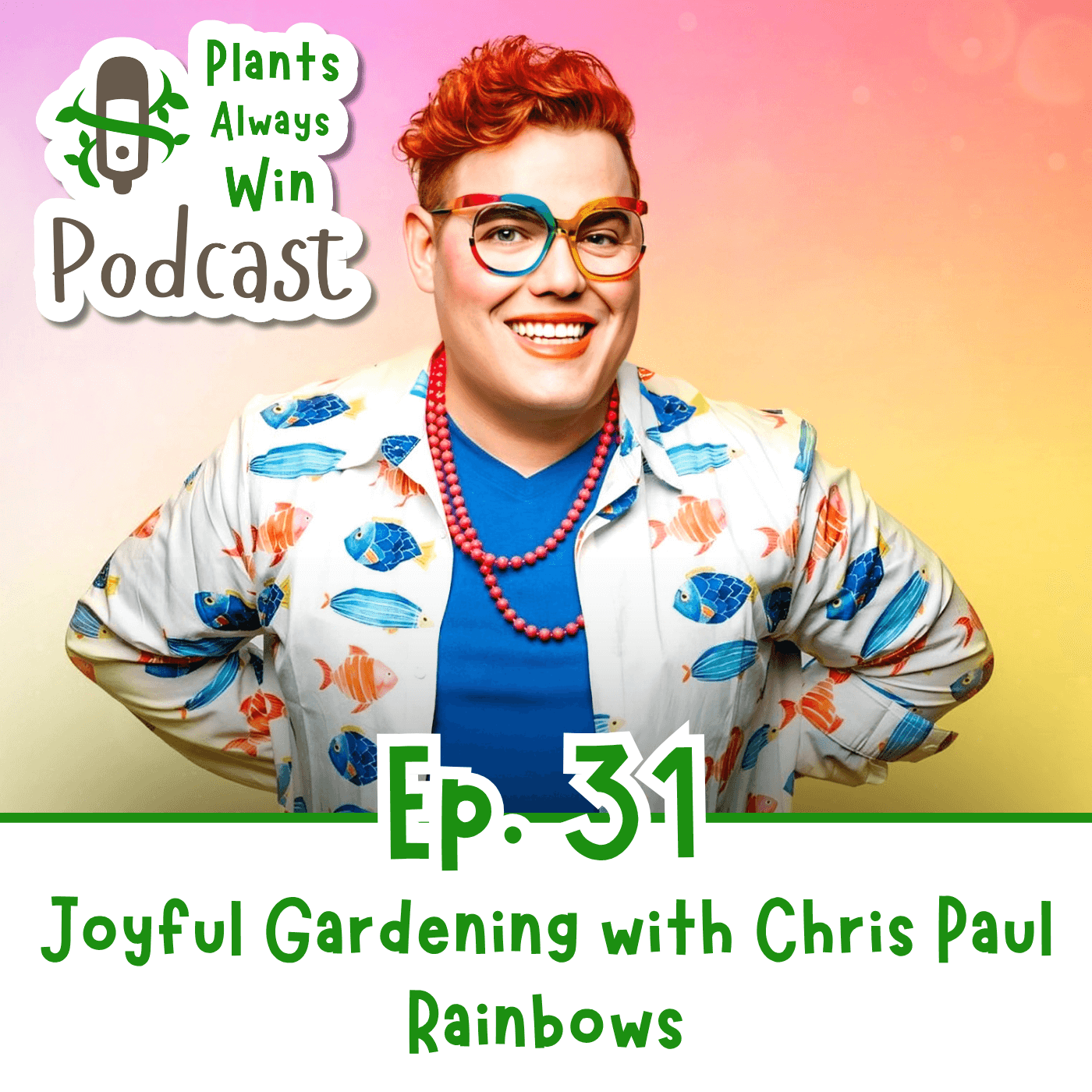
  • Ep. 31: Joyful Gardening with Chris Paul Rainbows

    Ep. 31: Joyful Gardening with Chris Paul Rainbows

    “I am very enthusiastic about [gardening]. I don’t know if I’m that great at it. I’m not very knowledgeable. I can’t really answer any of your garden questions, but I love getting my hands dirty.”

    Gardening is for everyone! We’ve interviewed plenty of experts on Plants Always Win who’ve mastered everything from groundcovers to home hydroponics, but every so often we like to bring you a less experienced guest who is already skilled in one crucial area: gardening with joyful abandon.

    In their day job, Chris Paul Rainbows is a speaker and strategist who helps organizations create spaces where everyone belongs. In their own space at home, Chris has tapped into the joy that 80s and 90s children’s television once brought them, designing whimsical gardens inspired by Polkadot Door, Mr. Dressup, Sesame Street, and more. They take us back to the urban-farm inspiration that led them to buy their current home, and the transformation it has undergone with chickens, rabbits, and a surprise pumpkin patch that led to some heartwarming community building. Community, gardening, and cultivating joy are inextricable subjects for Chris, who is an activist for queer and trans visibility. We talk hostas, native plants, managing invasive bindweed, and Chris’ upcoming debut book for 2026, Guinea Pigs Don’t Wear Pants

    Now come on into the pumpkin patch through the Polkadot Door and remind yourself just how FUN gardening can be. 

    Find Chris Paul Rainbows Online

    at their website, where you can also find information about Chris’ upcoming picture book, Guinea Pigs Don’t Wear Pants: https://www.chrispaulrainbows.com/ 

    on TikTok: tiktok.com/@chrispaulrainbows

    on Instagram: instagram.com/chrispaulrainbows/

    on YouTube: youtube.com/@chrispaulrainbows 

    on Facebook: facebook.com/Chrispaulrainbows/

    on LinkedIn: linkedin.com/in/chrisfarias/ 

    Learn More About The Unicorn Fund:

    https://www.chrispaulrainbows.com/blog/unchained-philanthropy-hamilton

    Comments? Feedback? Want your garden question to be featured in a future Q&A segment?

    Email us, reach out over social media, or get Q&A priority by supporting us on Patreon

    Discord: https://discord.gg/K6wF9dY4Ja

    Bluesky: @plantsalwayswin.com

    TikTok: @plantsalwayswinpodcast

    YouTube: @plantsalwayswinpodcast

    Website: www.plantsalwayswin.com 

    Credits

    Website Design and Illustration by Sophia Alladin

    Intro and Outro Music from #Uppbeat (free for Creators!): https://uppbeat.io/t/soundroll/when-my-ukulele-plays

    License code: GWOIMMBAS15FG6PH

    Timestamps

    00:25 Introduction and Housekeeping

    01:55 Meet Chris Paul Rainbows

    03:10 Gardening as Play

    06:29 Protesting for Urban Chickens

    07:47 Female and Male Gingko Biloba Trees

    09:35 Corpse Flowers and Little Shop of Horrors

    11:30 Pest Control and Fertilizer: Chickens Will Provide

    13:45 Can You Go to Jail for an Overgrown Lawn?

    15:17 Invasive Micro-Clover Lawn Replacement

    16:29 Militant Native Plant Communities

    17:23 Chris’ Inner Child Garden Project

    19:47 300 Accidental Pumpkin Plants

    21:54 The Unicorn Fund and the Most Sincere Pumpkin Patch

    24:14 Pumpkin Care and Powdery Mildew

    27:30 Strange and Fun Pumpkin Types

    29:15 Hand Pollinating Pumpkins

    30:30 The Importance of Queer and Trans Joy

    33:50 Plant Sexes and Pollination

    37:15 Chris and Sean Talk Parrots and Budgies

    41:03 Dealing with Field Bindweed

    47:27 Chris’ Children’s TV-inspired Garden Plans

    48:39 Relationship Roles: The Problem Maker and the Problem Solver

    49:36 How Oscar the Boxwood Grouch Started Everything

    52:09 Find Chris Online

    52:46 Chris’ Upcoming Picture Book, Guinea Pigs Don’t Wear Pants

    53:56 Outro and Contact Us

  • Ep. 30: Sassafras vs. Cola Nut

    Ep. 30: Sassafras vs. Cola Nut

    Are you finding yourself thirsty for a little soda pop this summer? How about for some botanical knowledge about soda pop’s history?

    In this plant face-off episode, Erin and Sean put some fizz into the competition with the plants behind two iconic flavours: the cola nut that gives cola its kick, and the sassafras that puts the root in root beer. Or, at least, the plants that did serve those roles before the advent of artificial flavouring. 

    Erin takes the first swig with a dramatic overview of the North American Sassafras albidum, an aromatic tree with a long history of use for medicine, food, furniture, and one nautical beverage that almost saw it hunted to extinction. She peers into the muddy waters surrounding its first use in root beer and, later, its controversial ban by the FDA, speculates about Choctaw influence on its use in gumbo, and delights over the Kanien’kéha (Mohawk) name, wenhákeras, meaning “smelly thing.”  Sean takes his kick at the can with the cola nut, the key ingredient behind the flavour and caffeine of cola beverages. He discusses the flavourful Malvaceae family tree of the West African cola tree (also spelled kola) (Cola nitida and Cola acuminata) and its surprising identity as a broad-leaf evergreen before serving up some knowledge about the fruit’s growing habits and its cultural history as a stimulant and a beverage ingredient. After some medical meanderings and a look at modern-day distribution, we wrap up Coca-Cola origins and its present-day ingredients.

    Who had the most interesting facts to share today? Vote for your favourite by tagging us on social media and using the hashtag #PAWFaceOff. 

    Comments? Feedback? Want your garden question to be featured in a future Q&A segment? Email us, reach out over social media, or get Q&A priority by supporting us on Patreon

    Discord: https://discord.gg/K6wF9dY4Ja

    Bluesky: @plantsalwayswin.com

    TikTok: @plantsalwayswinpodcast

    YouTube: @plantsalwayswinpodcast

    Website: www.plantsalwayswin.com 

    Credits

    Website Design and Illustration by Sophia Alladin

    Intro and Outro Music from #Uppbeat (free for Creators!): https://uppbeat.io/t/soundroll/when-my-ukulele-plays

    License code: GWOIMMBAS15FG6PH

    Citations

    Common names for sassafras

    Wood and charcoal indentification in southern MD. (n.d.). https://apps.jefpat.maryland.gov/woodandcharcoalid/Webpages-trees/Sassafras.htm

    Indigenous names for sassafras

    Plenty Canada. (2024). SaSSaFras. Greenbelt Indigenous Botanical Survey. https://gibsurvey.ca/species/sassafras

    Furniture uses

    Packard Forest Products. (2011, October 30). Sassafras – Packard Forest products. https://packardforestproducts.com/lumber/hardwood-lumber/species-guide/sassafras/

    Food and medicine uses

    MacKinnon, A., & Kershaw, L. (2016). Edible and medicinal plants of Canada. Publishing Partners.

    Root beer’s origins and the banning of safrole oil

    Verberg, S. (2023, November 30). Root beer: the quintessential American soda. American Homebrewers Association. https://homebrewersassociation.org/beyond-beer/root-beer-the-quintessential-american-soda/

    Sassafras oil and toxicity

    https://www.sciencedirect.com/topics/pharmacology-toxicology-and-pharmaceutical-science/sassafras

    The history of sassafras in North America

    Sassafras: Native gem of North America. (2022, October 10). Cornell Botanic Gardens. https://cornellbotanicgardens.org/sassafras-native-gem-of-north-america

    Sassafras in Ontario

    Sassafras. (n.d.). ontario.ca. https://www.ontario.ca/page/sassafras

    Growing sassafras

    Sassafras albidum (Cinnamon Wood, Common Sassafras, Mitten Tree, Sassafras, White Sassafras) | North Carolina Extension Gardener Plant Toolbox. (n.d.). https://plants.ces.ncsu.edu/plants/sassafras-albidum/

    Hassani, N. (2025, May 7). How to grow and care for sassafras. The Spruce. https://www.thespruce.com/sassafras-tree-plant-profile-5199214

    Cola nut overview

    Kola Trees (Genus Cola). (n.d.). iNaturalist. https://www.inaturalist.org/taxa/132989-Cola

    Wikipedia contributors. (2025, July 18). Kola nut. Wikipedia. https://en.wikipedia.org/wiki/Kola_nut

    Cola nut etymology

    Kola – Etymology, Origin & Meaning. (n.d.). Etymonline. https://www.etymonline.com/word/kola

    Medicinal uses for cola nut and caffeine

    Cola nut: health benefits, side effects, uses, dose & precautions. (2021, June 11). RxList. https://www.rxlist.com/supplements/cola_nut.htm#:~:text=Cola%20nut%20is%20used%20for,used%20as%20a%20flavoring%20ingredient

    Timestamps

    00:11 Introduction

    01:13 What’s Growing On? Sean’s Fruit Shrubs and Willow Wall

    03:38 What’s Growing On? Reciprocity in Erin’s Vegetable Garden

    06:03 The Range of Serviceberry Taste

    06:51 Water Break: Regionalisms

    07:19 The Plant Face-Off

    08:25 Sassafras Albidum, an Aromatic Shrub

    09:08 The Etymology of Sassafras 

    11:10 Indigenous Names for Sassafras

    12:55 The Distinct Look of a Sassafras Tree

    15:47 Wildlife, Building and Dye Use of Sassafras

    16:16 Sassafras’ Medicinal Properties

    20:00 Eating Sassafras leaves, stems, and pith

    21:49 How Sassafras Gave Us Root Beer…And What Went Wrong

    25:27 The Great Sassafras Hunts for Saloop

    27:33 The Invention of Root Beer

    28:50 Making Fermented vs. Carbonated Root Beer

    30:24 Growing Sassafras for Beauty, Hedges, Specimen Trees, and Remediation

    36:05 Water Break: Love Your Library

    37:28 Cola Nut? Kola Nut? Pick Your Spelling.

    39:54 West African Names for Cola Nut

    40:58 The Etymology of Cola Nut

    42:56 The Cola Tree, Both Evergreen and Deciduous

    43:55 Cola’s Unusual Flowering and Fruiting Habit

    45:45 Cola Range and Cultivation

    46:44 The Cola Nut: A Fleshy Pod

    47:57 Culinary and Medicinal Uses of Cola

    51:00 Cultural and Hospitality Uses in West Africa

    52:29 Cola Nut Harvesting

    53:20 The Invention of Coca Cola

    54:40 1880 Ad for Coca Cola, an “Intellectual Beverage”

    56:11 Conclusion and Contact Us