Category: Episode

Audio recordings and show notes for individual episodes of the Plants Always Win podcast

  • Ep. 19 Moths and Butterflies with Stoned Affection

    Ep. 19 Moths and Butterflies with Stoned Affection

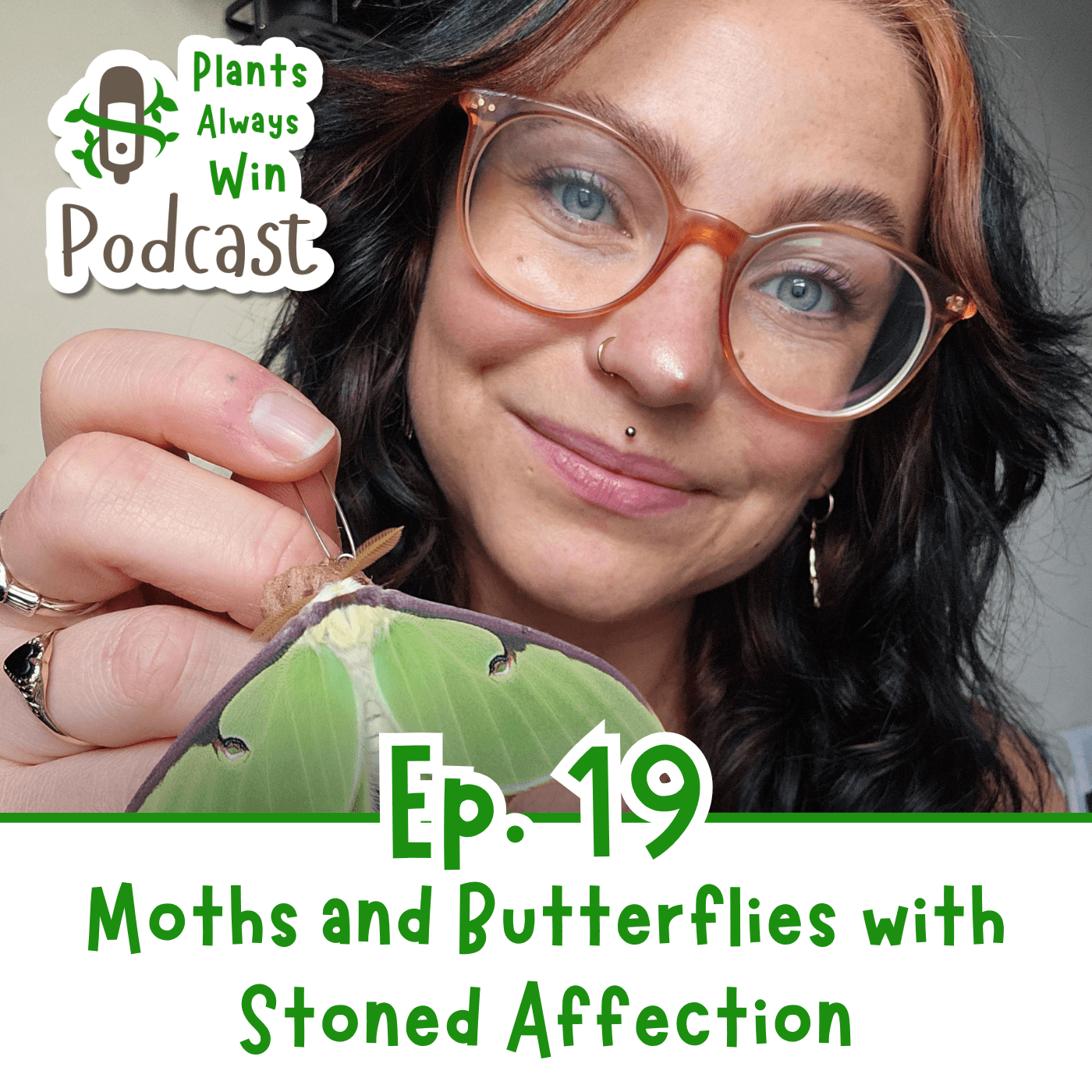
    Susie of Stoned Affection is a practicing entomologist who has been raising moths and butterflies—and raising awareness of them—since 2014. She also creates beautiful art from lepidoptera taxidermy. This week Susie joins Sean to talk about what it’s like to work with moths and butterflies, especially the ethical considerations that go into sourcing and raising both native and tropical species. If you’ve ever wondered about butterfly farming, butterfly houses, and sending live specimens through the mail, this is the episode to satisfy your curiosity. You’ll also find out what Susie thinks of lepidoptera in media, whether butterflies make good pollinators, and what the differences are between butterflies and moths. 

    To learn more about Susie, her art, and her outreach, visit her website at www.stonedaffection.com, or catch a Twitch live stream at https://www.twitch.tv/stonedaffection.

    You can also find Susie on social media: 

    TikTok: https://www.tiktok.com/@stonedaffection 

    Instagram: https://www.instagram.com/stonedaffection/

    Facebook: https://www.facebook.com/stonedaffection 

    Comments? Feedback? Want your garden question to be featured in a future Q&A segment? Email us, reach out over social media, or get Q&A priority by supporting us on Patreon

    Bluesky: @plantsalwayswin.com 

    TikTok: @plantsalwayswinpodcast 

    YouTube: @plantsalwayswinpodcast

    Website: www.plantsalwayswin.com 

    Credits

    Website Design and Illustration by Sophia Alladin

    Intro and Outro Music from #Uppbeat (free for Creators!): https://uppbeat.io/t/soundroll/when-my-ukulele-plays

    License code: GWOIMMBAS15FG6PH

    Timestamps

    00:46 Introducing Susie of Stoned Affection|

    03:21 Name Origins: Plants Always Win

    05:00 Ordering Insects by Post

    07:45 The Difference Between Moths and Butterflies

    11:40 The Family Lepidoptera

    12:50 Butterflies are Surprisingly Nasty, Little Creatures

    14:23 Moths That Can’t Eat

    16:12 Are Butterflies Good Pollinators?

    17:35 Making Silk from Silk Moths

    19:25 What do Moths Get Up to at Night?

    22:30 Ethically Sourcing Tropical and Local Insects

    27:00 Farmed Tropical Insects

    28:00 Butterfly Houses: Good or Bad?

    30:50 Susie’s Favourite Squeaking Moth Species

    33:10 Susie’s Favourite Butterfly

    35:19 What Happens when a Butterfly Pupates?

    40:28 Lepidoptera in Movies and TV Shows

    43:20 Susie’s Public Outreach Work

    47:14 Sean’s Relationship with Insects

    50:40 Jumping Spiders as Pets

    54:52 Earthworms in North America

    58:45 Susie’s Plugs

    1:04:15 Susie’s Word of Wisdom

    1:04:30 Conclusion and Contact Us

  • Ep. 18 Seed Starting vs. Direct Sowing

    Ep. 18 Seed Starting vs. Direct Sowing

    As a changeable April wears on, spring-hungry northern gardeners are anxious to get seeds planted. But should they start those seeds indoors with grow lights or on a widow sill? Or can they put them directly in the ground outside (if the snow ever melts!)? That’s the subject of this versus episode.

    Normally, Erin and Sean compete to see who can make their versus topic more interesting. This week, it’s more of a collaboration. Erin gives us the rundown on materials needed for direct sowing (not much but a rake and a gentle watering head are your friends) and Sean does the same for seed starting, covering grow lights, types of soil and soilless media, fans, and more. They compare the pros and cons of each method, which plants have a preference for one or the other, and what gardeners need to know about timing, growing season, and microclimates. They also shine a light on common seed-starting mistakes and explain how hardening off works. As always, accessibility and flexibility are Erin and Sean’s watchwords; as they say, failure is a common part of gardening and anything is worth an experiment. By the end of the episode, you’ll have your own ideas germinating about how to make the most of your gardening season .

    Comments? Feedback? Want your garden question to be featured in a future Q&A segment? Email us, reach out over social media, or get Q&A priority by supporting us on Patreon

    Bluesky: @plantsalwayswin.com 

    TikTok: @plantsalwayswinpodcast 

    YouTube: @plantsalwayswinpodcast

    Website: www.plantsalwayswin.com 

    Credits

    Website Design and Illustration by Sophia Alladin

    Intro and Outro Music from #Uppbeat (free for Creators!): https://uppbeat.io/t/soundroll/when-my-ukulele-plays

    License code: GWOIMMBAS15FG6PH

    Timestamps

    00:12 Introduction

    00:44 What’s Growing On: Erin’s Seed Snails

    02:50 What’s Growing On: Sean’s late-season winter sowing

    05:17 The Plant Face-Off, Sort Of

    05:32 Water Break

    05:38 Definitions: Direct Sowing

    06:16 Definitions: Seed Starting

    07:05 When do I Direct Sow my Seeds?

    12:35 Winter Sowing: a Hybrid

    13:20 When do I Start Seeds Indoors?

    18:46 Materials for Direct Sowing

    21:33 Materials for Seed Starting

    22:49 Soilless Media

    24:02 “With Mycorrhizae” Advertising

    31:04 Which Plants To Start Indoors or Out?

    37:10 Containers and Up-Potting

    37:43 Hardening Off and Transplant Shock

    42:45 Pros of Starting Seeds Indoors

    45:05 Pros of Direct Sowing Outdoors

    48:14 Sean’s Biggest Problem: Managing Moisture

    49:22 Erin’s Biggest Problem: Labels

    53:06 Outro

  • Ep. 17 Plants Need Bugs

    Ep. 17 Plants Need Bugs

    Plants always win…and to manage it, they need insects, arachnids, and other creepy-crawlies on their side. Of course, those creatures need plants too. In this episode, Sean and Erin are joined by Kelly and Amanda of Bugs Need Heroes. And what happens when you cross-pollinate a gardening podcast with one where an entomologist and an illustrator create bug-based superheroes? There’s a lot of laughter, a heaping scoop of science, and the birth of a new squad of garden defenders.

    Insects and their compatriots come armed with some pretty impressive real-world superpowers that savvy gardeners can use to their advantage. This week’s discussion delves into the incredible diversity of insect species, the role biting insects play in pollination, the importance of leveraging friendly neighbourhood garden expertise for advice that suits your location, and the villainy of spraying for mosquitoes. Then there’s the highlight of the episode: superhero personas based on the denizens of the garden, including bumblebees, wolf spiders, and…well, you’ll have to listen to find out.

    Want more of Kelly and Amanda? Visit the Bugs Need Heroes website at https://www.bugsneedheroes.com/ or find their Reddit at https://www.reddit.com/r/BugsNeedHeroes/

    Fact Check:

    The year of the last recorded death by black widow venom in the United States is stated on many websites as 1983. Wikipedia offers a link to the Clinical Toxicology paper this fact apparently comes from, although the link is broken.

    If you have questions of your own or if you want to weigh in on these topics (we love learning new things through respectful discussion!), email us or reach out over social media.

    Bluesky: @plantsalwayswin.com 

    TikTok: @plantsalwayswinpodcast 

    YouTube: @plantsalwayswinpodcast

    Website: www.plantsalwayswin.com 

    Remember that you can get Q&A priority and other perks by supporting us on Patreon

    Credits

    Website Design and Illustration by Sophia Alladin

    Intro and Outro Music from #Uppbeat (free for Creators!): https://uppbeat.io/t/soundroll/when-my-ukulele-plays

    License code: GWOIMMBAS15FG6PH

    Citation

    Bumblebee Proboscises by Rusty

    Burlew, R. (2024, July 8). Hey bee, stick out your tongue and say “Ahh.” Honey Bee Suite. https://www.honeybeesuite.com/hey-bee-stick-out-your-tongue-and-say-ahh/

    Timestamps

    00:00 Introducing Bugs Need Heroes!

    02:40 Bugs are everywhere

    03:22 How Many Wolf Spiders? We Don’t Know. 

    04:45 Plants vs. Insects: How they Make New Ones

    07:40 Amanda’s Real Superhero Background

    09:20 Kelly’s Real Bug Background

    10:53 Mosquitoes are Essential, Actually (Stop Spraying!)

    17:43 Context! Nuance! Location Matters.

    21:26 The One Species Kelly would Remove from Earth

    22:30 Yes, Sean has Mites in his Eyebrows (So Do You)

    23:40 Insect Superheroes

    24:56 Erin’s Insect Hero: Just a Happy Lil Bumblebee

    30:45 Kelly’s Insect Hero: Wolf Spider

    32:46 Black Widow Bites

    37:16 Maman the Spider Sculpture in Ottawa

    40:03 The Hunter Hunter Phagogenesis Tangent

    42:15 Amanda’s Luck-Powered Hero Insect

    47:50: Sean’s Serviceberry Hero

    51:18 Is Superman a Plant?

    57:33 Snail Teeth are Stronger than Diamonds

    58:50 Our Hero Costumes

    1:01:16 Shout-Outs

    1:02:30 Outro and Contact Us

  • Ep. 16 Q&A Special: Cedars, Compost, and Cardboard Mulch

    Ep. 16 Q&A Special: Cedars, Compost, and Cardboard Mulch

    We’re cultivating a safe space to ask gardening questions!

    We have been plotting for some thyme to add some dedicated Q&A episodes to the recording schedule. While we love seeding quick questions into the end of a show, and while many of our most popular episodes have sprouted from a particularly juicy inquiry, there are plenty of other questions that merit ten minutes of discussion rather than sixty or two. In this inaugural Q&A special, we tackle a bushel of cedar and shrub questions and spend some time in the vegetable garden as well:

    • Do you need to mitigate any environmental impacts when removing cedars near your home?
    • Are the rumours true? Is using cardboard mulch in your veggie garden unsafe?
    • Why do some people call Rose of Sharon a “dirty” tree?
    • When an old cedar hedge develops gaps, how can they be filled?
    • Can you shorten an established cedar hedge that’s giving too much shade?
    • What’s the best soil-to-compost ratio to help a struggling vegetable garden?

    If you have questions of your own or if you want to weigh in on these topics (we love learning new things through respectful discussion!), email us or reach out over social media.

    Bluesky: @plantsalwayswin.com 

    TikTok: @plantsalwayswinpodcast 

    YouTube: @plantsalwayswinpodcast

    Website: www.plantsalwayswin.com 

    Remember that you can get Q&A priority and other perks by supporting us on Patreon

    Credits

    Website Design and Illustration by Sophia Alladin

    Intro and Outro Music from #Uppbeat (free for Creators!): https://uppbeat.io/t/soundroll/when-my-ukulele-plays

    License code: GWOIMMBAS15FG6PH

    Citations

    Understanding PFAS

    Our current understanding of the human health and environmental risks of PFAS | US EPA. (2024, November 26). US EPA. https://www.epa.gov/pfas/our-current-understanding-human-health-and-environmental-risks-pfas

    Figure out if your cardboard mulch has (significant amounts of) PFAS

    Olson, T., & Olson, T. (2024, May 23). Is cardboard mulch toxic? – Mother Earth News. Mother Earth News – the Original Guide to Living Wisely. https://www.motherearthnews.com/organic-gardening/gardening-techniques/is-cardboard-mulch-toxic-zm0z24jjzols/

    Debunking the anti-cardboard crusade

    Hoag, M. (2024, April 2). Addressing the 2024 cardboard Sheet-Mulching myth madness. Transformative Adventures. https://transformativeadventures.org/2024/04/01/debunking-the-2024-cardboard-sheet-mulching-myth-madness/ 

    Timestamps

    00:11 Introduction

    00:53 What’s Growing On? Erin’s False Spring

    04:36 What’s Growing On? Sean’s Pupdate and Seedling Roulette

    17:10 Water Break

    17:26 Removing Cedars Near a House: Environmental Impacts?

    12:35 Is Cardboard Mulch Really Unsafe?

    24:48 What Gives Rose of Sharon a “Dirty Tree” Reputation?

    31:18 How Can You Fill in Gaps in a Sparse, Old Cedar Hedge?

    37:10 Can You Shorten an Established Cedar Hedge?

    48:55 What’s the Best Soil-to-Compost Ratio for Veggie Gardens?

    57:37 Invitation to Conversation

    58:39 Conclusion and Contact Us

  • Ep. 15 Lost Ladies of Garden Writing with Carol Michel

    Ep. 15 Lost Ladies of Garden Writing with Carol Michel

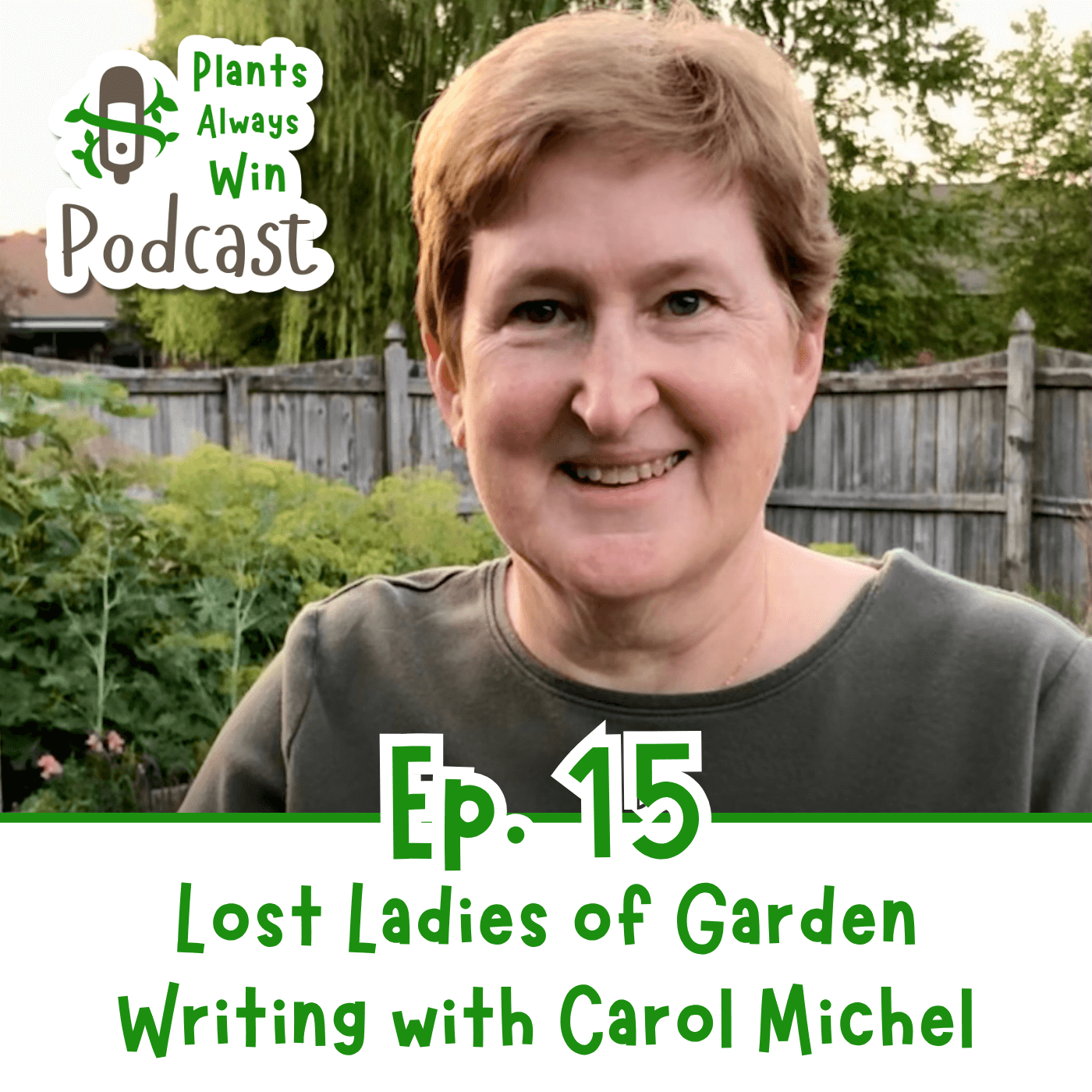
    Carol Michel is a garden author and co-host of The Gardenangelists podcast. She boasts of having the world’s largest hoe collection…which is overshadowed only by her library-worthy collection of gardening books. Among the hundreds of volumes on her shelves are hard-to-find copies of books by a number of American women who were horticultural experts of the nineteenth and twentieth centuries, but who have been all but forgotten by history. To honour them, Carol started a Substack called the Lost Ladies of Garden Writing. On this week’s episode of Plants Always Win, she invites us into some of their stories. 

    Publishing styles and garden trends change over time, but some things stay the same. People want to know how to make their poinsettia re-bloom, how to get rid of pests, how to find the hottest new cultivar. Carol uses genealogical records, newspaper archives, and Google Books to piece together the lives of the women who were answering those questions in decades past, then shares them with her subscribers. It’s a project of passion and dedication, and it has given her some extraordinary stories to tell!

    Lost Ladies featured in this episode include:

    • Cynthia Westcott, who saved the Azaleas of the southern United States 
    • Grace (G.A.) Woolson who was, as America’s foremost fern expert, often assumed to be a man
    • Viola Brainerd Baird, whose 1940s Wild Violets of North America is still unmatched
    • Kate Brewster, whose book The Little Garden for Little Money was somewhat hampered by her own wealth
    • Alma C. Guillet moved from Toronto to New York City and catalogued all the trees and shrubs in Central Park
    • Mrs. L.L. Huffman, who wrote under her husband’s initials and was actually called Minnie Enola

    Some better-known ladies of garden writing are also mentioned:

    • Cassandra Danz, A.K.A. Mrs. Greenthumbs
    • Elizabeth Lawrence, whose Charlotte, North Carolina garden was so beloved it’s now part of a bird sanctuary
    • Jean Hersey, whose book The Shape of the Year is still read and enjoyed

    To enjoy more garden gab with Carol, find her in the following places:

    • The Lost Ladies of Garden Writing Substack, which is updated weekly with new lost ladies
    • Her helpful weekly gardening newsletter, In the Garden with Carol J Michel
    • The Gardenangelists Podcast, which she co-hosts with Dee Nash
    • Her website, caroljmichel.com, where you will also find her books of humorous and helpful gardening essays:
    • Potted and Pruned: Living a Gardening Life
    • Homegrown and Handpicked: A Year in a Gardening Life
    • Seeded and Sodded: Thoughts from a Gardening Life
    • Creatures and Critters: Who’s in my Garden
    • Digging and Delighted: Live your Best Gardening Life

    Comments? Feedback? Want your garden question to be featured in a future Q&A segment? Email us, reach out over social media, or get Q&A priority by supporting us on Patreon

    Bluesky: @plantsalwayswin.com 

    TikTok: @plantsalwayswinpodcast 

    YouTube: @plantsalwayswinpodcast

    Website: www.plantsalwayswin.com 

    Credits

    Website Design and Illustration by Sophia Alladin

    Intro and Outro Music from #Uppbeat (free for Creators!): https://uppbeat.io/t/soundroll/when-my-ukulele-plays

    License code: GWOIMMBAS15FG6PH

    Timestamps

    00:30 Introducing Carol Michel

    01:30 The World’s Largest Hoe Collection

    04:45 Carol’s Gardening Book Library

    07:40 The Lost Ladies of Garden Writing Project

    10:30 Garden Writing Then and Now

    11:34 Cynthia Westcott, PhD: The Gardener’s Bug Book

    13:48 Can We Trust Old Gardening Books?

    15:18 Buckner Hollingsworth, Gardening on Main Street

    16:51 Carol convinces Sean to Become a Collector

    19:57 G.A. (Grace) Woolson, Ferns

    24:39 Elizabeth Lawrence, A Southern Garden

    26:29 How Carol Does her Research

    27:38 Writing Under their Husbands’ Names

    29:33 Kate Brewster, The Little Garden for Little Money

    30:41 Jean Hersey, The Shape of the Year

    34:36 Alma C. Guillet, Make Friends of the Trees and Shrubs 

    35:20 Cassandra Danz, Mrs. Greenthumbs

    38:54 Carol’s “Humorous but Helpful” Gardening Books

    39:07 Find Carol Online

    40:53 Contact us and Outro

  • Ep. 14 Living Soil with Michelle Bruhn

    Ep. 14 Living Soil with Michelle Bruhn

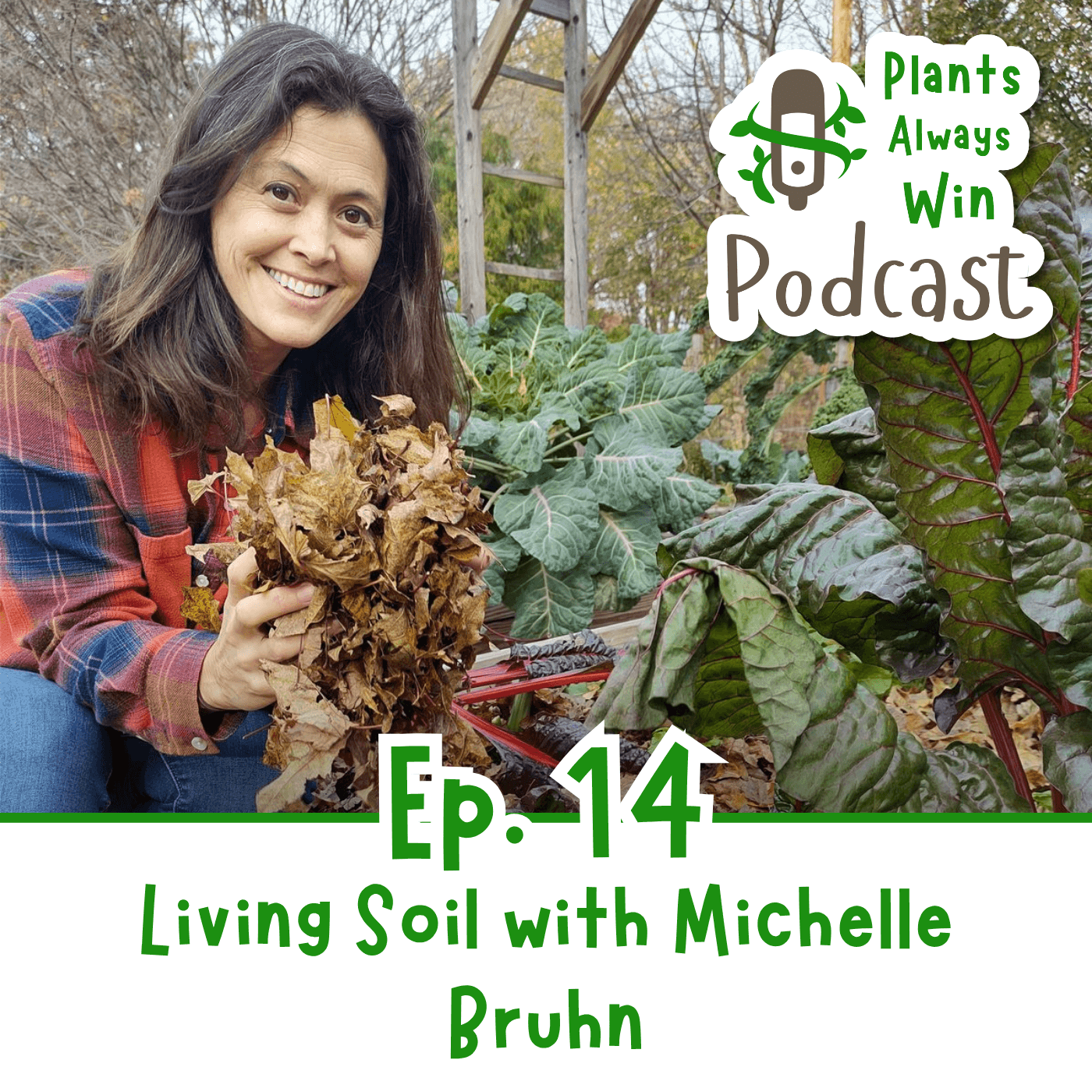
    Soil is the foundation of a healthy garden…or homestead…or farm. For sustainable gardening that gives us nutritious food without depleting the land, we need to know how to feed and maintain living soil. After all, it’s the community of living things in the soil that feeds the plants we eat ourselves. That’s where Michelle Bruhn comes in. Michelle is a suburban homesteading author, speaker, and educator who manages the online information hub Forks in the Dirt. This week, she joins Erin (who’s always excited about home-scale regenerative agriculture) to talk about how she has turned a sandy suburban lot into a tiny paradise that produced almost seven hundred pounds of food in 2024.

    Through the course of this conversation, Michelle gives us the dirt on a range of organic practices that build soil, feed it, and maximize its effectiveness, even in a short growing season. We’re talking composting in place with sheet mulching, lasagna gardening, and hügelkultur; supporting healthy soil food webs with companion planting, mulch, and cover crops; and extending the growing season with cold frames, hoop houses, and even plastic bins. If you think you’re already a master of all these things, so did Erin—and this interview got her out gardening in the early-March snow to try something she’s never done before.

    If you want to keep learning from Michelle Bruhn, check out…

    You can also find her on social media:

    Citations:

    Jeff Lowenfels’ book Teeming with Microbes, which discusses how adding Nitrogen fertilizer to soil decreases the Nitrogen produced by bacteria:

    Lowenfels, J., & Lewis, W. (2010). Teaming with Microbes: The Organic Gardener’s Guide to the Soil Food Web. Timber Press (OR).

    Michelle’s recommended source on nutrients and wood decomposition (correction: from USDA, not US Forest Service): 

    Marcot, B. G. (2023, February 10). Ecosystem processes related to wood decay. DecAID. https://apps.fs.usda.gov/r6_decaid/views/ecosystem_processes.html

    The study on nitrogen immobilization with wood decomposition that Erin referenced:

    van der Wal, A., de Boer, W., Smant, W. et al. Initial decay of woody fragments in soil is influenced by size, vertical position, nitrogen availability and soil origin. Plant Soil 301, 189–201 (2007). https://doi.org/10.1007/s11104-007-9437-8

    Sepp Holtzer, Hügelkultur expert

    Holzer, S. (n.d.). Huegel Culture Design. Sepp Holzer Permaculture. Retrieved March 10, 2025, from https://www.seppholzer.info/huegel-culture-design/

    Michigan State Extension Services study on the pest suppression abilities of mustard as a cover crop

    Snapp, S., Date, K., Cichy, K., O’Neil, K., & Michigan State University, Department of Crop and Soil Sciences. (2006). Michigan farmers rely on a wide range of cover crops as vital management tools. In Michigan Farmers Rely on a Wide Range of Cover Crops as Vital Management Tools. https://midwestcovercrops.org/wp-content/uploads/2017/06/MI_2006_Mustards-A-Brassica-Cover-Crop-for-Michigan.pdf

    Utah State Extension publication on squash beetles and blue Hubbard squash

    USU Extension IPM program. (2021). Blue hubbard squash as a trap crop to suppress squash bugs. In USU Extension IPM Program. https://extension.usu.edu/planthealth/ipm/veg/Trap-Crops-Squash-Bugs.pdf

    Comments? Feedback? Want your garden question to be featured in a future Q&A segment? Email us, reach out over social media, or get Q&A priority by supporting us on Patreon

    Bluesky: @plantsalwayswin.com 

    TikTok: @plantsalwayswinpodcast 

    YouTube: @plantsalwayswinpodcast

    Website: www.plantsalwayswin.com 

    Credits

    Website Design and Illustration by Sophia Alladin

    Intro and Outro Music from #Uppbeat (free for Creators!): https://uppbeat.io/t/soundroll/when-my-ukulele-plays

    License code: GWOIMMBAS15FG6PH

    Timestamps

    00:11 Introduction

    01:00 Michelle Bruhn and Forks in the Dirt

    03:10 Michelle’s Suburban Homestead

    03:26 Lawns for Bees and for Kids

    06:03 Growing Neighbours through Gardening

    08:28 Sheet Mulching for No-Dig Garden Beds

    11:39 Urban and Suburban Pollinator Habitat

    17:22 Why Compost Instead of Chemicals?

    23:10 Water Break

    25:00 Leaf Mulch and the Law of Return

    28:55 Lasagna Gardening

    30:25 Hügelkultur: Turn Wood Debris into Soil

    37:58 Fungal Decomposition Beats Bacterial Decomposition

    38:48 Permaculture and Indigenous Knowledge

    40:47 Companion Planting: Optimize the Plant Community

    43:15 Using Trap Crops for Aphids

    46:01 Yellow Mustard and Cover Crops

    48:23 Growing Zones and Frost Dates

    53:42 Season Extension in Cold Climates

    1:02:36 Find Michelle Online

    1:03:44 Outro and Contact Us

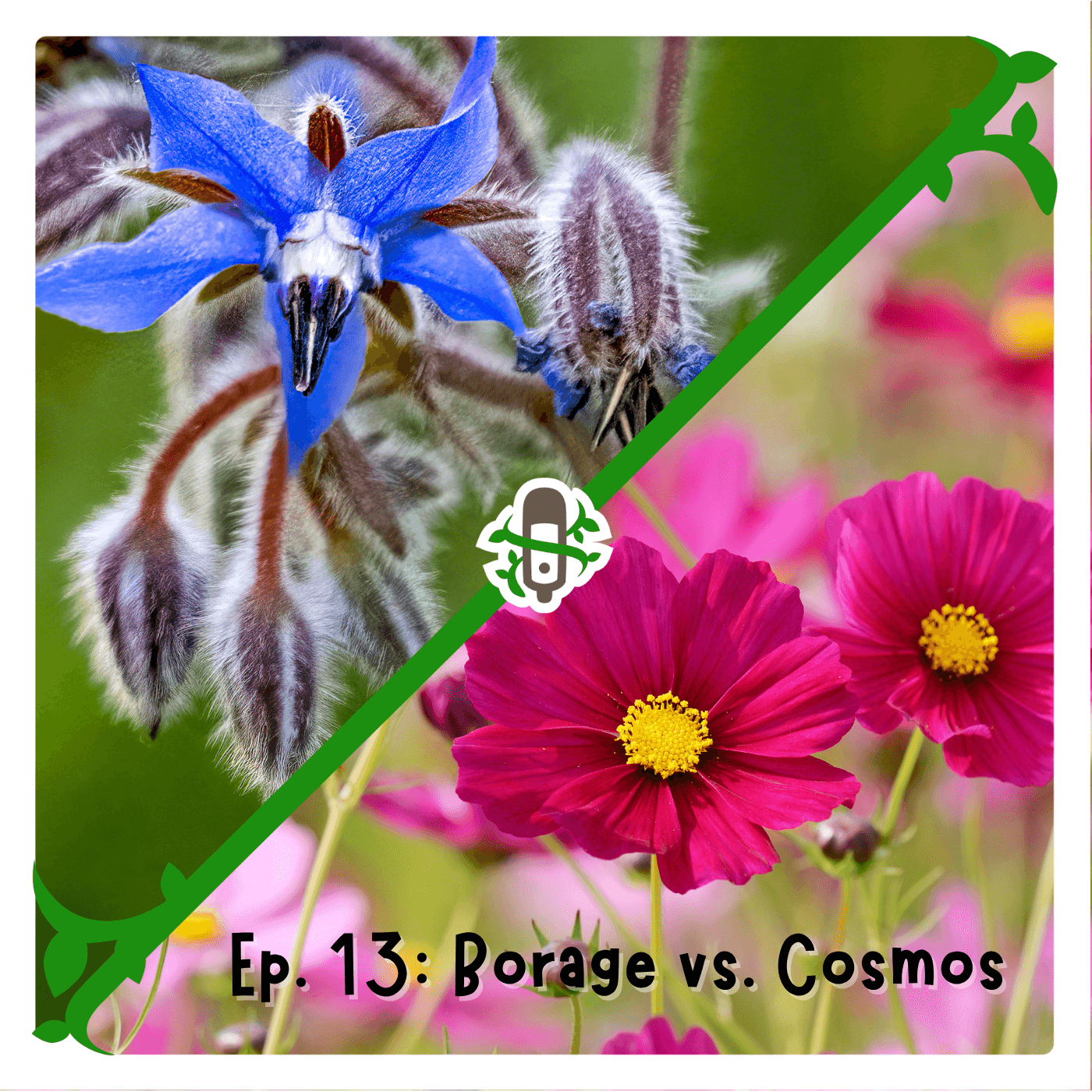
  • Ep. 13 Beneficial Non-Natives? Borage vs. Cosmos

    Ep. 13 Beneficial Non-Natives? Borage vs. Cosmos

    It’s a concern being voiced by conscientious gardeners everywhere: is it okay to plant a non-native flower that feeds pollinators but also self-sows freely? One suspect that is being discussed in many online gardening groups in borage. It shows up in pollinator-garden seed mixes that the purchasers expected to be 100% native. It features at seed swaps and in seed libraries because its seeds are easy to collect, and established gardeners know it always brings the bees in. But it also sows itself aggressively, and it didn’t evolve alongside North American pollinators. The people want to know: is it problematic to grow it? Is an aggressive plant necessarily invasive? 

    That’s the question that sets the stage for this week’s versus episode. Sean takes on the borage question while Erin examines her own potentially-problematic fave, cosmos. They look into each plant’s origins, its spread around the world, and how manageable it is once it’s in your garden. They examine studies about wildlife use and raise questions about nectar and pollen quality. Along the way, they uncover a treasure trove of interesting science…and a wealth of questions still to be answered. 

    Who brought the most fascinating facts about their plant this week? Vote for borage or cosmos by tagging us on social media and using the hashtag #PAWFaceOff. 

    Comments? Feedback? Want your garden question to be featured in a future Q&A segment? Email us, reach out over social media, or get Q&A priority by supporting us on Patreon

    Bluesky: @plantsalwayswin.com 

    TikTok: @plantsalwayswinpodcast 

    YouTube: @plantsalwayswinpodcast

    Website: www.plantsalwayswin.com 

    Credits

    Website Design and Illustration by Sophia Alladin

    Intro and Outro Music from #Uppbeat (free for Creators!): https://uppbeat.io/t/soundroll/when-my-ukulele-plays

    License code: GWOIMMBAS15FG6PH

    Citations

    What is Borage?

    borage. (2025). In Merriam-Webster Dictionary. https://www.merriam-webster.com/dictionary/borage 

    A broad overview of Borage

    Hageman, B. (2024, December 10). Borage: a beautiful herb with many benefits. Grow Organic. https://www.groworganic.com/blogs/articles/borage-a-beautiful-herb-with-many-benefits?srsltid=AfmBOorlAOi28B_PjvoYMORhIqEzDctHk2McssEbhsKe870WpYnYA8yn

    Use of borage for gamma-linolenic acid (GLA)

    Ontario Ministry of Agriculture, Food and Rural Affairs. (n.d.). Specialty cropportunitites – borage. Specialty Cropportunities. Retrieved February 24, 2025, from https://www.omafra.gov.on.ca/CropOp/en/indus_misc/oil_crops/borage.html

    Borage’s medical potential

    BORAGE: Overview, uses, side effects, precautions, interactions, dosing and reviews. (n.d.). Web MD. Retrieved February 24, 2025, from https://www.webmd.com/vitamins/ai/ingredientmono-596/borage 

    The origin of the word cosmos for the well-arranged flower and the well-ordered universe

    Liddell, H. G., & Scott, R. (n.d.). κόσμος. Henry George Liddell, a Greek-English Lexicon. Retrieved February 24, 2025, from https://www.perseus.tufts.edu/hopper/text?doc=Perseus:text:1999.04.0057:entry=ko/smos

    Kosmos Meaning – Greek Lexicon | New Testament (NAS). (n.d.). Bible Study Tools. Retrieved February 24, 2025, from https://www.biblestudytools.com/lexicons/greek/nas/kosmos.html

    Growing and keeping cosmos as cut flowers

    Boeckmann, C. (2025, February 7). Cosmos Flowers: Planting, growing, and caring for Cosmos. Almanac.com. https://www.almanac.com/plant/cosmos

    Care and wildlife use

    Iannotti, M. (2024, July 19). How to grow and care for cosmos. The Spruce. https://www.thespruce.com/how-to-grow-cosmos-4125538

    An account of leafcutter bees using cosmos

    Burlew, R. (2017, March 31). Cosmos: a multipurpose bee flower. Honey Bee Suite. https://www.honeybeesuite.com/cosmos-a-multipurpose-bee-flower/

    The food value of cosmos pollen and nectar

    Hicks, D. M., Ouvrard, P., Baldock, K. C. R., Baude, M., Goddard, M. A., Kunin, W. E., Mitschunas, N., Memmott, J., Morse, H., Nikolitsi, M., Osgathorpe, L. M., Potts, S. G., Robertson, K. M., Scott, A. V., Sinclair, F., Westbury, D. B., & Stone, G. N. (2016). Food for Pollinators: Quantifying the nectar and pollen resources of urban flower meadows. PLoS ONE, 11(6), e0158117. https://doi.org/10.1371/journal.pone.0158117

    Use of quercetin in cosmos rhizomes for treating malaria

    Ali, A. H., Sudi, S., Shi-Jing, N., Hassan, W. R. M., Basir, R., Agustar, H. K., Embi, N., Sidek, H. M., & Latip, J. (2021). Dual Anti-Malarial and GSK3Β-Mediated Cytokine-Modulating activities of quercetin are requisite of its potential as a Plant-Derived therapeutic in malaria. Pharmaceuticals, 14(3), 248. https://doi.org/10.3390/ph14030248

    One of many personal accounts of using Sulphureus for dye

    Keegan, G. (n.d.). Cosmos. Graham Keegan. Retrieved September 5, 2023, from https://www.grahamkeegan.com/cosmos?srsltid=AfmBOooSp8-OAkqSDU6XCI6pd0VP-Ny6aGKZvqfDgCfORtTfFTHmEuRu

    Commentary on the potential invasiveness of cosmos

    Ask Mr. Smarty Plants. (2013, April 26). Lady Bird Johnson Wildflower Center – the University of Texas at Austin. https://www.wildflower.org/expert/show.php?id=9284 

    Timestamps 

    00:37 Should We Grow Non-Native “Beneficial” Flowers?

    01:41 Erin’s Sentimental Attachment to Cosmos

    03:53 The Plant Face-Off

    04:14 Sean’s Plant: Borage

    04:25 The Boraginaceae Family

    05:19 Borage Etymology

    05:58 True Annuals, and How They Die

    12:12 What Makes a Flower Perfect?

    14:15 Borage’s Native Range

    15:11 Gamma-Linolenic Acid

    17:20 Eating Borage

    18:44 Borage Benefits and Warnings

    21:35 Are Hairy Plants Pest Assassins?

    25:05 Do Naturalized Plants Stay Non-Invasive? 

    30:56 Water Break

    32:33 Erin’s Plant: Cosmos

    34:01 Cosmos Name Origins

    36:19 What’s a Half-Hardy Annual?

    37:31 Uses for Cosmos

    38:25 Seeking High-Quality Nectar and Pollen

    42:22 Growing Cosmos

    43:09 Can You Eat Cosmos? No One Agrees.

    47:43 Medicinal Uses of Cosmos

    49:25 Cosmos Range and Invasiveness

    53:38 Do All Flowers Benefit Pollinators?

    56:17 Deciding Whether to Plant Non-Native Flowers

    57:46 The Things That Get You Gardening

    58:56 Contact Us and Outro
  • Ep. 12 Groundcovers with Kathy Jentz

    Ep. 12 Groundcovers with Kathy Jentz

    This week we cover a lot of ground on the subject of groundcovers with Kathy Jentz. Kathy is the editor and publisher of Washington Gardener, the host of the Garden DC podcast, and the author of Groundcover Revolution, a book written to give inspiration and examples for turf grass substitutes that gardeners everywhere can use to find the best plants for their region. They can also use its attractive and accessible photographs to get their spouses and their HOA on board.

    We start our conversation by establishing some ground rules: what is a groundcover? Kathy says it’s any plant that covers the ground thickly enough to suppress weeds, which kicks off a conversation about turf substitutes, plant height, maintenance, and moss lawns. We reflect on the history of lawns, the aggressive nature of many groundcovers, and how to manage them through plant choice or through physical intervention. What about avoiding invasive species of groundcovers altogether? Kathy shares some favourites and some species she would never recommend in her region, Washington DC. Erin and Sean offer their own top and bottom choices for Central Ontario and discover, in spite of distance and very different growing seasons, some common ground.

    For more of Kathy, you can find her in the following places:

    Upcoming speaking engagements

    • The 2025 Northwest Flower Garden Festival in Seattle 
    • The 2025 Philadelphia Flower Show

    Kathy’s Online Platforms

    • Washington Gardener Plant Store:

    https://shop.kathyjentz.com/

    • Washington Gardener Blog:

    www.washingtongardener.blogspot.com

    • Washington Gardener Archives:

    http://issuu.com/washingtongardener

    • Washington Gardener Discussion Group:

    https://groups.google.com/g/washingtongardener/

    To join, send an email to – washingtongardener+subscribe@googlegroups.com

    • Washington Gardener Twitter Feed:

    www.twitter.com/WDCGardener

    • Washington Gardener Bluesky Feed:

    https://bsky.app/profile/wdcgardener.bsky.social

    • Washington Gardener Instagram Account:

    https://www.instagram.com/wdcgardener/

    • Washington Gardener Pinterest Account:

    https://www.pinterest.com/wdcgardener/boards/

    • Washington Gardener TikTok Account:

    https://www.tiktok.com/@wdcgardener

    • Washington Gardener Facebook Page:

    https://www.facebook.com/WashingtonGardenerMagazine/

    • Washington Gardener Youtube: 

    www.youtube.com/washingtongardenermagazine

    • Washington Gardener Amazon Affiliate Store:

    www.amazon.com/shop/wdcgardener

    • Washington Gardener Podcast: GardenDC

    https://anchor.fm/gardendc/

    Kathy’s Books

    Groundcover Revolution: How to use sustainable, low-maintenance, low-water groundcovers to replace your turf

    The Urban Garden: 101 Ways to Grow Food and Beauty in the City

    Books and Experts Referenced in this Episode:

    The Magical World of Moss Gardening by Annie Martin, a.k.a. Mossin’ Annie

    Comments? Feedback? Want your garden question to be featured in a future Q&A segment? Email us, reach out over social media, or get Q&A priority by supporting us on Patreon

    Bluesky: @plantsalwayswin.com 

    TikTok: @plantsalwayswinpodcast 

    YouTube: @plantsalwayswinpodcast

    Website: www.plantsalwayswin.com 

    Credits

    Website Design and Illustration by Sophia Alladin

    Intro and Outro Music from #Uppbeat (free for Creators!): https://uppbeat.io/t/soundroll/when-my-ukulele-plays

    License code: GWOIMMBAS15FG6PH

    Timestamps

    00:45 Intro

    01:10 Welcoming Kathy Jentz

    1:53 What is a Groundcover, Anyway?

    03:39 Moss Lawn Appreciation

    06:03 Mossin’ Annie, Moss Lawn Expert

    08:07 Kathy’s New Book, Groundcover Revolution

    09:25 Writing Gardening Books for an International Audience

    11:52 Lawns, Landowners, and Historic Showing Off

    14:55 Managing Aggressive and Invasive Groundcovers

    20:39 A Native Lily of the Valley

    24:45 Growing Conditions in Washington, DC

    28:49 Growing Conditions in Central Ontario

    31:50 Very Different Growing Seasons

    34:50 Kathy’s Favourite Groundcovers

    40:35 Erin’s Favourite Groundcovers

    43:40 Sean’s Favourite Groundcovers

    48:28 Gardening with Deer

    50:47 Groundcovers Kathy Never Recommends

    53:22 Groundcovers that Sean Never Recommends 

    54:54 Managing the Mint Family

    57:47 Don’t Shame Your Neighbours

    1:02:30 Erin’s Least Favourite Groundcover

    1:04 Where to Find Kathy

    1:05:53 Contact Us and Outro

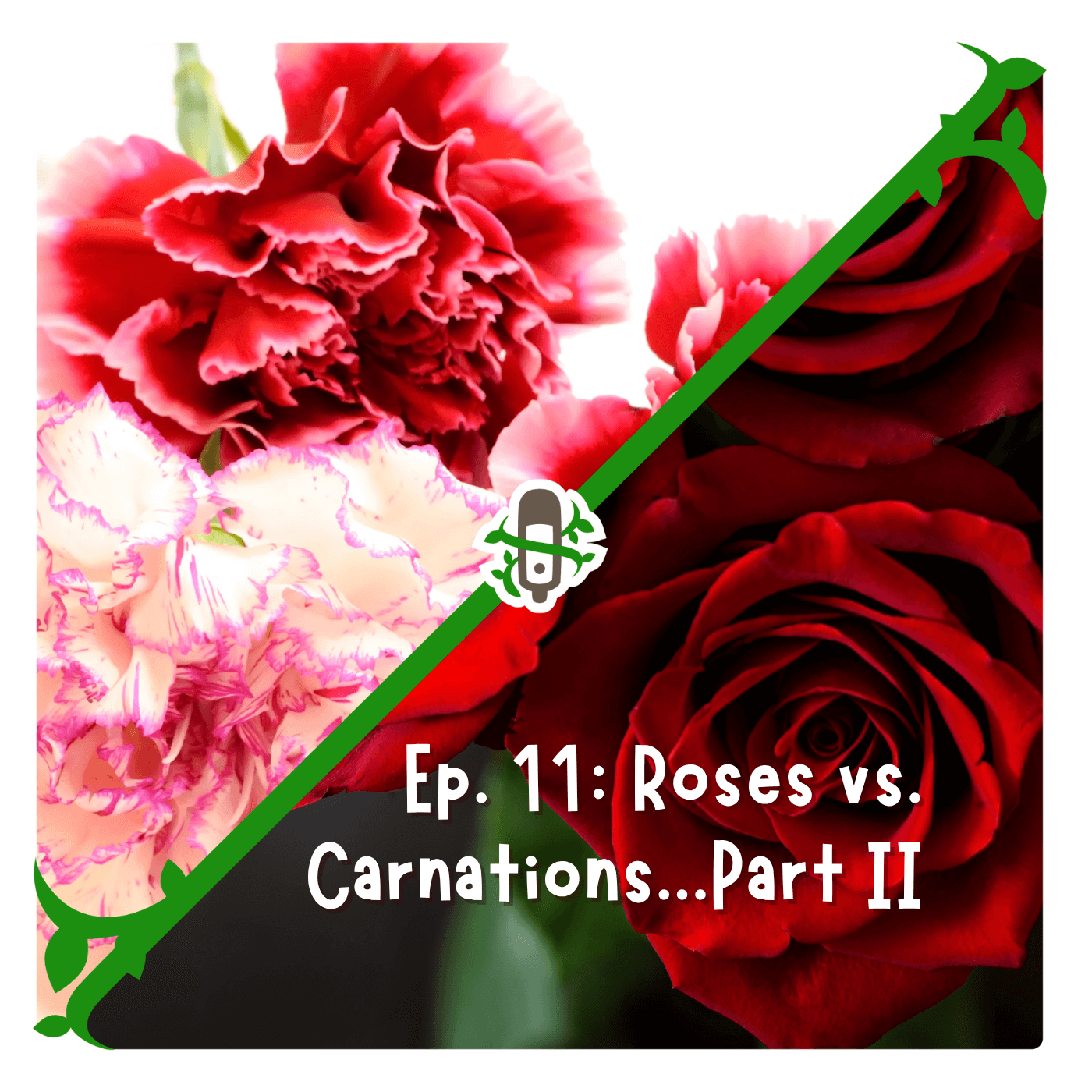
  • Ep.11 Valentine’s Day Special, Part 2, Carnation Nation

    Ep.11 Valentine’s Day Special, Part 2, Carnation Nation

    This is the second instalment of our two-part Roses vs. Carnations Valentine’s Day special. After Sean eloquently shared his love for roses earlier this week, Erin barges in with the claim that roses are elitist and carnations are the flower of the people. Her focus is Dianthus caryophyllus, a cut-flower relative of some familiar garden flowers like pinks. She takes us back to the Carnation Revolution and other people’s uprisings in which carnations became important symbols, tells us what the name “pink” has to do with dianthus’ ruffled petals, and explores carnations’ aromatic uses. When Erin puts Sean on the spot to describe the science behind why putting food colouring in a carnation’s water source will dye it, he pulls it off admirably and gives us some bonus facts about mineral buildup on tap water-fed houseplants. 

    The episode gathers steam with school carnation sales at Valentine’s Day (awkward), Mother’s Day symbology (touching), and the Vicorian language of flowers (not Erin’s favourite thing). Then it winds down with carnation care both in the garden and as cut flowers. 

    Are you ready to join Carnation Nation? Or have roses won your heart? Cast your vote by tagging us on social media and using the hashtag #PAWFaceOff. 

    Fact Check

    We promised to find out which was named first: pinking shears (which cut saw-toothed edges in fabric) or garden pinks (which have petals with saw-toothed edges). The answer is not clear-cut, but we highly recommend the Online Etymology Dictionary’s interesting entry about it: https://www.etymonline.com/word/pink 

    Comments? Feedback? Want your garden question to be featured in a future Q&A segment? Email us, reach out over social media, or get Q&A priority by supporting us on Patreon

    Bluesky: @plantsalwayswin.com 

    TikTok: @plantsalwayswinpodcast 

    YouTube: @plantsalwayswinpodcast

    Website: www.plantsalwayswin.com 

    Credits

    Website Design and Illustration by Sophia Alladin

    Intro and Outro Music from #Uppbeat (free for Creators!): https://uppbeat.io/t/soundroll/when-my-ukulele-plays

    License code: GWOIMMBAS15FG6PH

    Citations

    Carnations overview

    Dianthus caryophyllus “Vienna Mischung.” (n.d.). Missouri Botanical Garden. Retrieved February 6, 2025, from https://www.missouribotanicalgarden.org/PlantFinder/PlantFinderDetails.aspx?kempercode=z910

    Carnations’ Caryophyllaceae relatives 

    The Editors of Encyclopaedia Britannica. (1999, May 4). Caryophyllaceae | Description, Taxonomy, Genera, & Species. Encyclopedia Britannica. https://www.britannica.com/plant/Caryophyllaceae

     Growing carnations

    NC State Extension. (n.d.). Dianthus caryophyllus. North Carolina Extension Gardener Plant Toolbox. Retrieved February 6, 2025, from https://plants.ces.ncsu.edu/plants/dianthus-caryophyllus/

    Caring for your carnation bouquet

    Plant Addicts. (2023, April 5). Cut Carnation Flower Care | Plant Addicts. https://plantaddicts.com/cut-carnation-flower-care/?srsltid=AfmBOoomoX8SAtbDhtMp6O2aJ9c0bqjVF7i2Mxq12NotQoMiF1zWtRa-

    Carnations Flower Care. (n.d.). Farmgirl Flowers. Retrieved February 6, 2025, from https://farmgirlflowers.com/care/care-by-flower-type/carnations?srsltid=AfmBOoqvVyDnu1wEwiRoqpfa9sYsja3keUGZ6K8yqnNayTL4MsfB6k1Y


    Timestamps

    1:00 Intro

    Erin’s Plant: Carnations

    1:38 Dianthus caryophyllus and Family

    3:37 Which Came First, the Pink or the Shears?

    4:35 Carnation Etymology

    6:15 How to Describe a Carnation

    9:03 Transgenic Cultivars

    11:18 A Symbol of the People

    13:32 Aromatic Uses 

    15:15 The Science of Colouring Carnations with Food Dye

    17:46 Mineral Buildup on Houseplants

    20:06 Carnations’ Mild Toxicity

    20:58 Valentine’s Day School Carnation Sales

    22:48 The Motherhood Connection

    22:30 The Victorian Language of Flowers

    25:42 Growing Carnations at Home

    29:59 Cover your Bare Soil!

    32:09 Insects Hosted by Carnations

    33:36 Caring for your Carnation Bouquet

    40:13 Points per Pun

    40:51 Contact Us and Outro

  • Ep.10 Valentine’s Day Special Part 1: Roses

    Ep.10 Valentine’s Day Special Part 1: Roses

    This is a special two-part Plant Face-Off! We had so much to say about roses and carnations that we had to split the recording into two episodes. In this instalment, we start with some housekeeping, answering the listener question “What is Patreon?”, explaining why we’re phasing off the Meta platforms Facebook and Instagram, and reminding YOU to reach out if you’d like to join the conversation at our Plants Always Win Discord server.

    After that Sean takes us through history and around the world with the ever-sweet subject of roses. Learn about the surprising members of the rose family fruit tree, explore their history and symbolism, and learn how to take care of them in your garden—especially here in Ontario. Sean also answers some questions from the internet, such as “Can I regrow my rose bouquet?” “Are rose petals edible?”, and “How can I make my cut roses last?” 

    But the face-off doesn’t end here. Come back later this week for Part II when Erin takes the floor with roses’ Valentine’s Day competitor, carnations. Then cast your vote by email on social media with the hashtag #PAWfaceoff. 

    Comments? Feedback? Want your garden question to be featured in a future Q&A segment? Email us, reach out over social media, or get Q&A priority by supporting us on Patreon

    Bluesky: @plantsalwayswin.com 

    TikTok: @plantsalwayswinpodcast 

    YouTube: @plantsalwayswinpodcast

    Website: www.plantsalwayswin.com 

    Credits

    Website Design and Illustration by Sophia Alladin

    Intro and Outro Music from #Uppbeat (free for Creators!): https://uppbeat.io/t/soundroll/when-my-ukulele-plays

    License code: GWOIMMBAS15FG6PH

    Citations

    Roses (native and not) that grow in Ontario

    Ontario Trees and Shrubs – Roses Group. (n.d.). http://ontariotrees.com/main/group.php?id=80 

    Distinguishing different types of roses

    The Different Types of Roses: An Ultimate Guide. (n.d.). Jackson & Perkins. Retrieved February 4, 2025, from https://www.jacksonandperkins.com/ultimate-guide-rose-types/a/types-of-roses/ 

    General information about the Rosa genus

    roses (Genus Rosa). (n.d.). iNaturalist. https://www.inaturalist.org/taxa/53438-Rosa 

    Roses and their soil pH needs

    Jones, S. (n.d.). Balancing soil pH for growing roses. Santa Clarita Valley Rose Society. Retrieved February 4, 2025, from http://www.santaclaritarose.org/BalancePH.html 

    Research into traditional medicinal uses of roses

    Schwarcz, J., PhD. (2023, February 8). Valentine’s Day! Time to smell the roses! McGill University Office for Science and Society. https://www.mcgill.ca/oss/article/history/valentines-day-time-smell-roses

    Timestamps

    00:59 Intro

    1:41: Audience question: What is Patreon?

    4:37 Social Media Changes

    5:59 Merch Update

    6:50 Our Discord Server

    8:10 The Plant Face-Off

    8:32: Sean’s Plant: Roses

    9:45 The Surprising Rosaceae Family

    12:15 The Symbolism of Roses

    13:13 Greek and Egyptian History

    14:35 Roses Come From Everywhere!

    16:28 A Rose by Any Other Type…

    18:16 Growing Roses in your Garden

    19:02 Fertilizer Tangent: They Alter pH?

    22:34 Pruning and Deadheading your Roses

    24:32 Rosehips Don’t Lie: Eating Roses

    25:33 Reverting to Wild Rootstock

    26:24 What Pests and Diseases? Basically All of Them.

    30:01 Rose Fragrances: Perfumes, Oils, and your Grandma’s Soap

    31:35 Pigments, Dried Flowers, and Other Uses

    33:24 Culinary and Medical Uses (and Speaking to the Deer)

    38:10 Answering Internet Questions about Roses

    40:49 Regrowing your Bouquet

    43:05 Caring for your Cut Roses

    46:20 Shoutout to Teacup Miniature Roses

    48:14 Outro